REVIEW · KRAKOW
From Krakow: Auschwitz Museum and Wieliczka Salt Mine Tour
Book on GetYourGuide →Operated by ComFort Tours Cracow · Bookable on GetYourGuide
A day that’s this heavy deserves careful planning. You’ll pair Auschwitz-Birkenau with the Wieliczka Salt Mine, two places that couldn’t be more different in mood. That contrast is exactly why the combination works: one tour forces you to face history, and the other lets you see how people shaped their world underground.
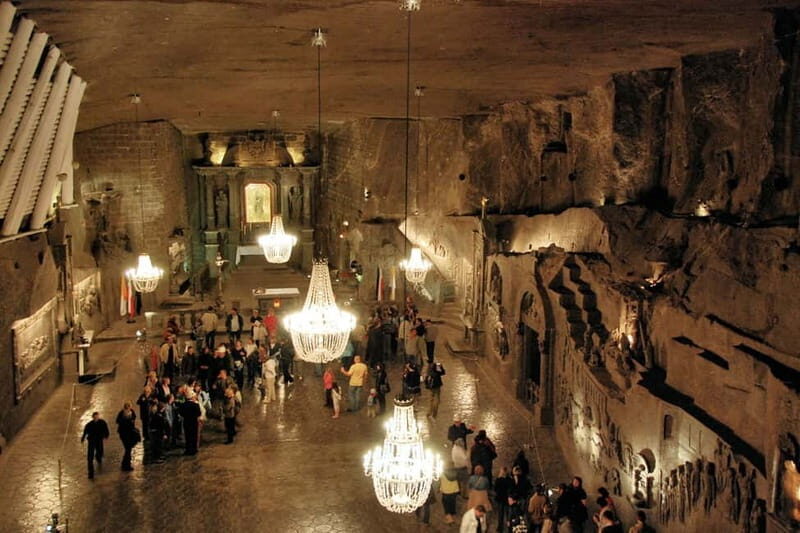
What I like most is the way the Auschwitz visit is handled in two guided parts, so you get time to process what you’re seeing instead of rushing. I also like that your mine time includes a guided walk through major chambers, including St. Kinga’s Chapel carved from rock salt.
One possible drawback: it’s a long day with early travel, and the content at Auschwitz is emotionally intense. If you’re sensitive or you don’t handle structured tours well, you’ll want to go in ready for a slow, serious pace.
In This Review
- Key things to know before you go
- Why this Kraków day feels so heavy—and so worth it
- The ride from Kraków sets your pace for the whole day
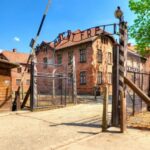
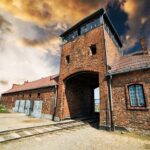
- Auschwitz-Birkenau: first guided tour at Auschwitz I
- What to do during the 15-minute break
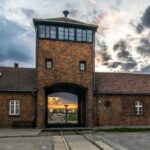
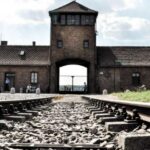
- Switching to Auschwitz II-Birkenau for the full impact
- The transfer buffer: why the in-between time matters
- Wieliczka Salt Mine: 380 steps and 64 meters down
- Inside the 20 chambers and the meaning of St. Kinga’s Chapel
- English guidance: how the live guide and audio support you
- Transport and tickets: fewer headaches on a long day
- Price and value: $335 per person, and what you should check
- What to bring, and what gets left behind
- Who this tour suits best (and who should think twice)
- Should you book this Auschwitz + Wieliczka combo?
- FAQ
- How long is the Kraków to Auschwitz and Wieliczka tour?
- Is pickup included from Kraków?
- What tours are included at Auschwitz-Birkenau?
- How long is the Wieliczka Salt Mine guided portion?
- How deep do you go in the salt mine?
- What is included for language and guidance?
- What should I bring with me?
- What items are not allowed?
- What happens if the name on my booking doesn’t match my ID?
- Can I bring my own food?
Key things to know before you go
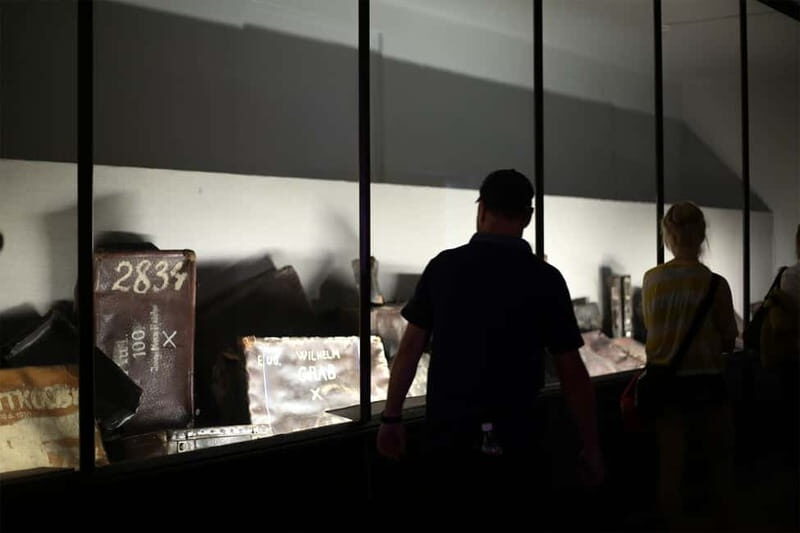
- Auschwitz is split into two guided sections, including Auschwitz I and Auschwitz II-Birkenau
- You’ll also see Wieliczka’s underground world, with 20 chambers and St. Kinga’s Chapel
- Private transport from Kraków saves time and stress versus juggling public transit
- English live guiding plus English audio helps if you want extra clarity
- You descend into the mine via 380 steps to about 210 feet (64 meters) below ground
Why this Kraków day feels so heavy—and so worth it
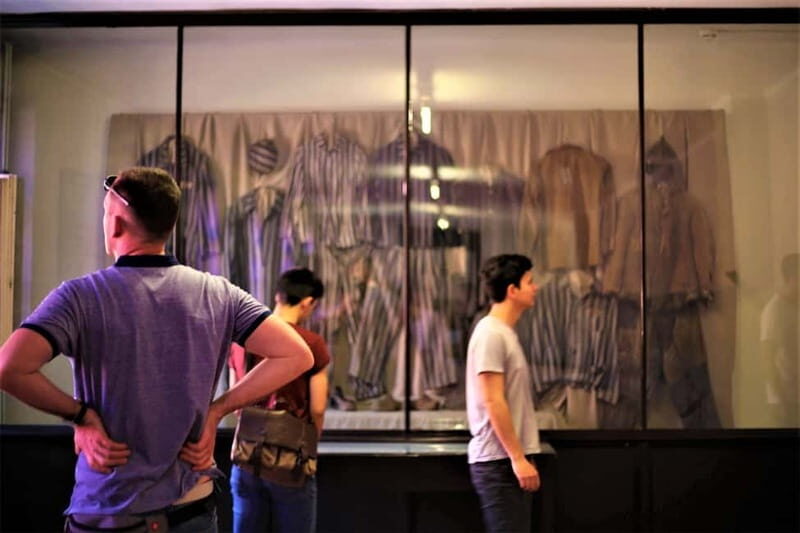
This trip works because it’s not just sightseeing. It’s built around two very different kinds of “scale.”
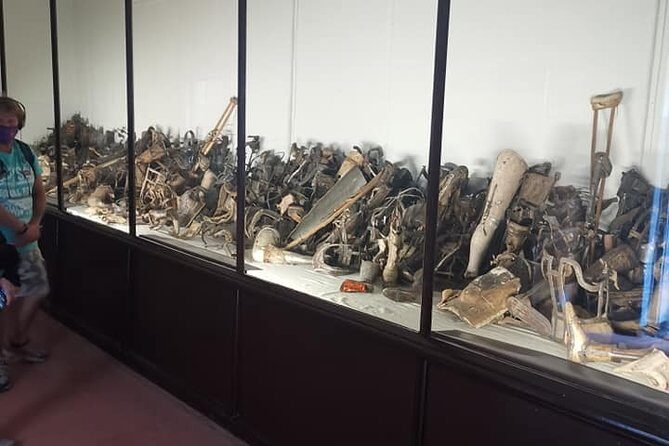
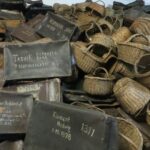
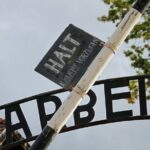
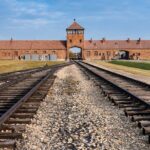
Auschwitz-Birkenau is presented as the Nazi regime’s largest concentration and extermination camp complex, founded on 27 April 1940. The stakes are hard to grasp: the site records about 1.1 million deaths before the end of World War II. A good guided visit helps you make sense of what you’re seeing without turning it into a checklist.
Then you shift gears to Wieliczka, where the story is survival-by-craft and human ingenuity. This salt mine has operated since the 13th century and (per the tour info) continued working until 2007. That long timeline turns your visit into something more than a pretty underground attraction.
Other Auschwitz tours from Krakow in Krakow
The ride from Kraków sets your pace for the whole day
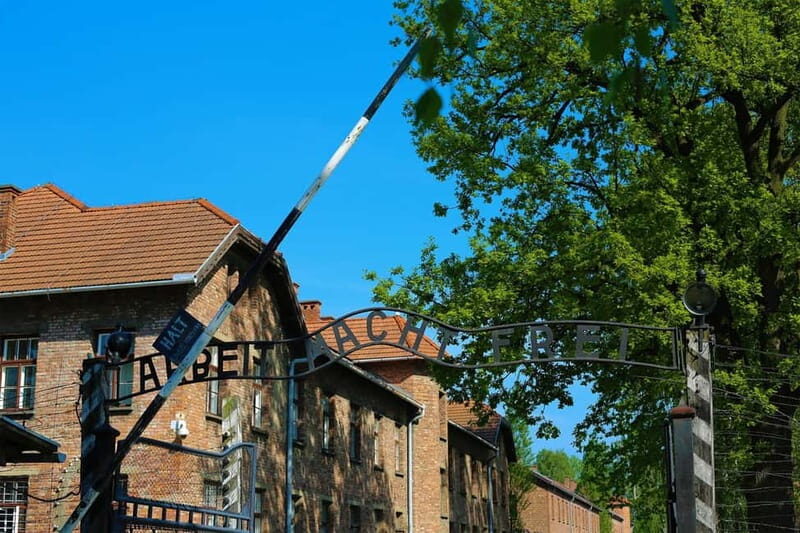
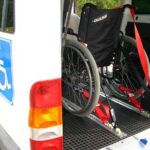
You’ll be picked up from your Kraków accommodation and travel by private van. The drive time to Auschwitz is listed at about 1.5 hours.
That travel leg matters because it lets you arrive with your head in the right place. It also means the day is less chaotic: you’re not trying to time trains, find meeting points, or manage tickets while you’re already anxious about the day ahead. The tour also includes drinking water, which you’ll be glad you have once the schedule ramps up.
Auschwitz-Birkenau: first guided tour at Auschwitz I
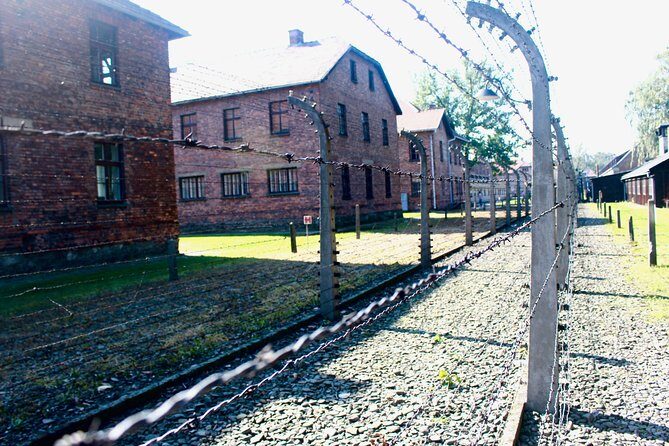
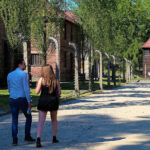
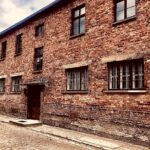
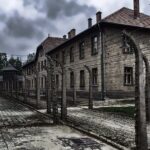
Your day begins at the Auschwitz-Birkenau Memorial and Museum with a guided tour of about 2 hours. After that, there’s a short break.
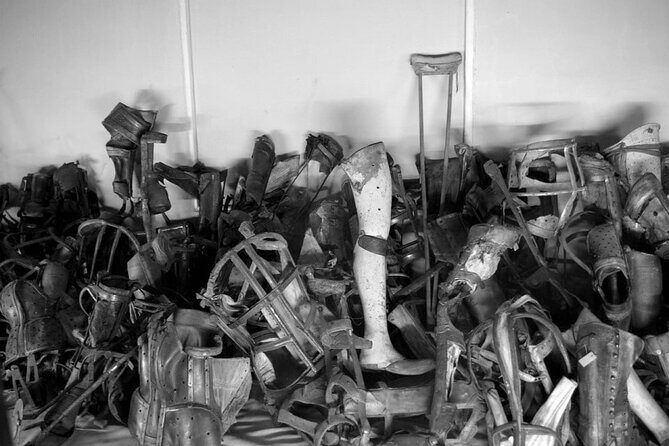
This first section is valuable because it gives you context and structure before you move to the larger, more sprawling parts of the complex. In practice, a guided approach helps because Auschwitz isn’t laid out like a normal museum. You’re moving through spaces that were once part of a real system, and it’s easy to lose track of what you’re looking at without a guide’s framework.
The tour is in English, and the experience package includes an English audio guide too. That dual layer is useful if your attention drifts for a moment—especially when the subject matter is intense. You can listen as you move, then refocus when you hit a key area.
What to do during the 15-minute break
That mid-day break is short, so think of it as a reset. Use it to:
- use the facilities if you need them
- take a quiet breath before you go back in
- check your shoes and pace yourself for the second section
This isn’t a time to rush into snacks and chatter. The timing is tight, and keeping your energy steady will make the second half easier.
Switching to Auschwitz II-Birkenau for the full impact
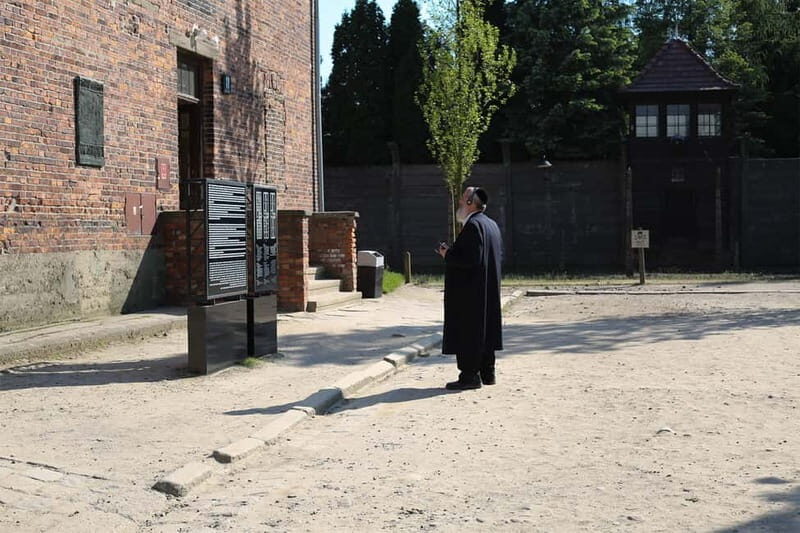
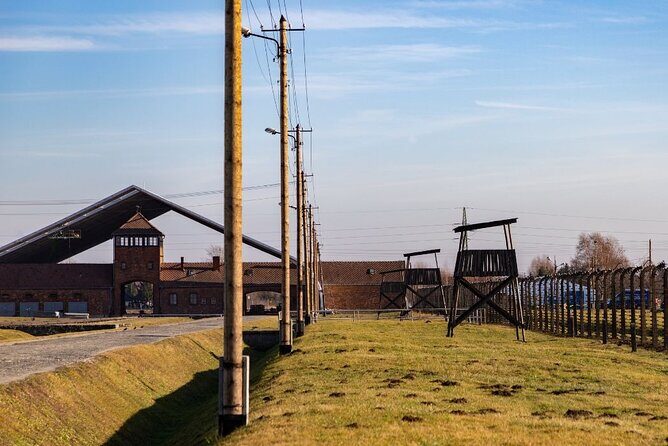
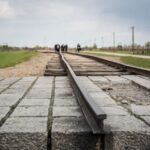
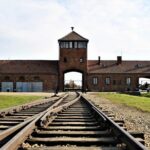
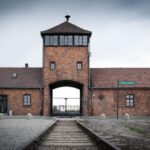
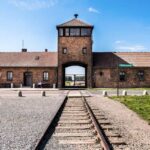
After a brief transfer, you’ll go to Auschwitz II-Birkenau for a guided tour of about 1.5 hours.
This second visit is the “big space” part of the complex. It’s where the scale hits you in a different way. The value of doing Auschwitz in two guided blocks is that it reduces sensory overload. You’re not forced to absorb everything at once, and you’re not left trying to interpret massive open areas with no context.
The guides matter here. In the experience feedback linked to this operator, people praised the guides and drivers for being excellent and very helpful. There’s a common-sense lesson in that: if a guide explains what you’re seeing clearly, you’ll get more meaning per minute—and fewer moments where you feel lost.
Also, keep your expectations steady. You’re not going to “finish” Auschwitz like a normal attraction. You’re going to leave with a lasting weight.
Other Auschwitz and Wieliczka Salt Mine combination tours in Krakow

The transfer buffer: why the in-between time matters

Between Auschwitz and the next stop, you’ll spend about 75 minutes in transit to Wieliczka, and then you’ll have time later for the return trip to Kraków.
That transit chunk is more important than it seems. After Auschwitz, your body and brain can feel tired even if you don’t want to admit it. Having the schedule move you forward reduces decision fatigue: you don’t have to figure out what to eat, where to go, or how to travel while emotionally drained.
It’s also why you should plan your day around calm efficiency. You’ll be glad this is private transport instead of a self-organized route.
Wieliczka Salt Mine: 380 steps and 64 meters down
Your second major stop is Wieliczka Salt Mine, with a guided tour lasting about 2.5 hours.
The mine visit begins with a descent: the tour info notes 380 steps down to the first level, about 210 feet (64 meters) below ground. That’s a big detail, and it’s the kind of thing you should take seriously when choosing shoes and pace.
This part of the experience is different from Auschwitz. You’ll hear stories about the mysteries of the mine and the people who worked there, plus the role of nature over time. The guided format matters here too—salt mines have their own logic, and a guide helps you understand why certain places matter and how everything connects.
There’s another practical reason to take it seriously: you may feel cooler underground and your legs will do more work than you expect. Even if the walk is guided, you still have to get from chamber to chamber.
Inside the 20 chambers and the meaning of St. Kinga’s Chapel
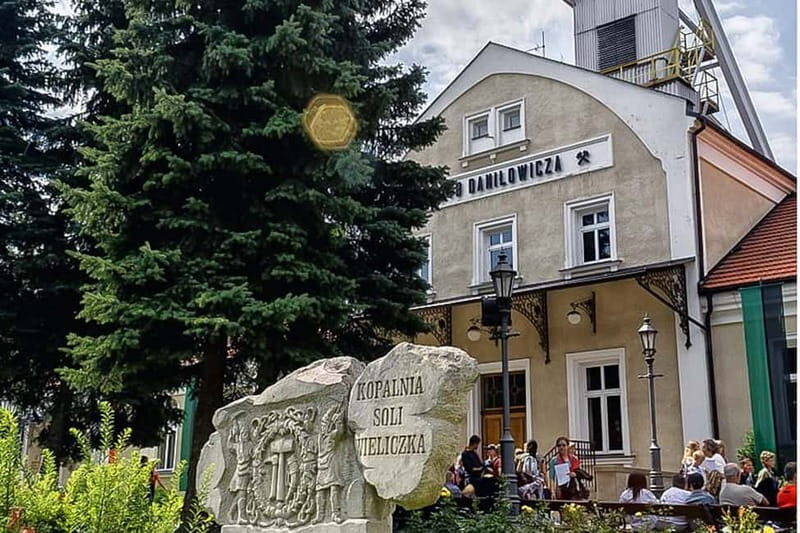
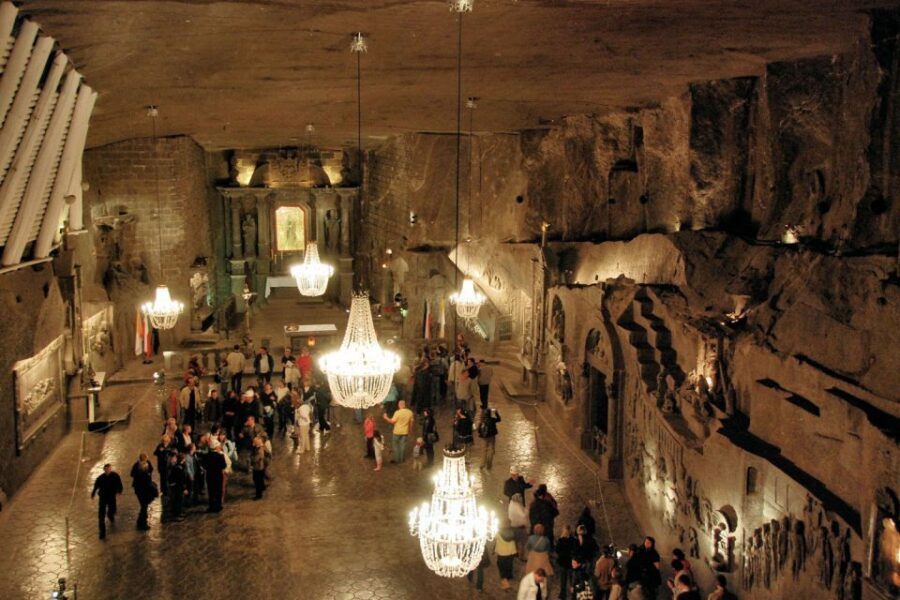
Wieliczka’s tour includes exploration of 20 chambers, and one highlight is St. Kinga’s Chapel.
The chapel is described as an enchanting underground cathedral carved entirely from rock salt. That detail is the kind of visual wow you want after Auschwitz—proof that the same earth that once hid fear also housed craft, community, and belief.
What you should take from this section isn’t just that it’s beautiful. It’s that the mine is being framed as a living human site, not a staged set. The guide’s explanation of how people worked and how natural forces shaped the space helps you connect the physical structures to the human story.
If you’re taking photos, do it quietly and respectfully, especially around memorial or prayer-like spaces such as the chapel. The goal here is wonder without turning it into a theme-park stop.
English guidance: how the live guide and audio support you
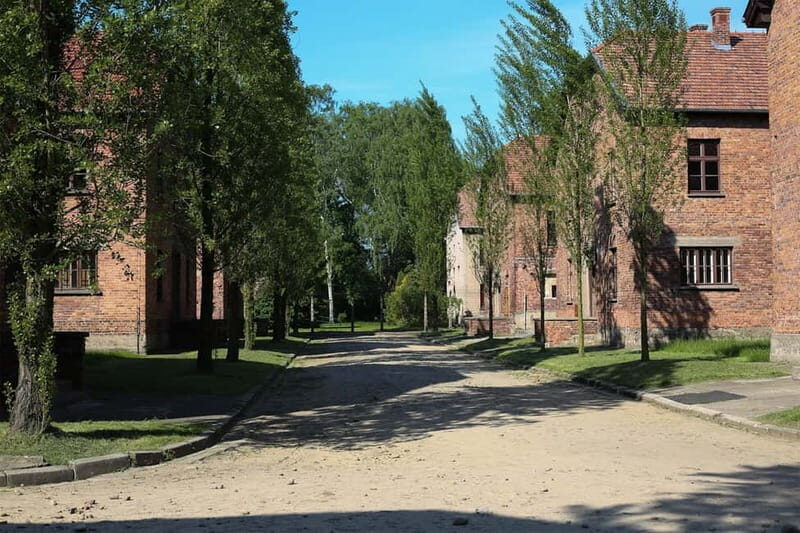
This tour runs in English, with a live tour guide at Auschwitz-Birkenau and at Wieliczka, and it also includes an English audio guide.
That setup helps for two reasons:
- Live guiding keeps the experience coherent, with timing and emphasis you can follow.
- Audio support gives you a second chance when you miss a sentence or want to slow down.
In the feedback tied to this provider, people specifically praised the guides and the drivers as excellent. While you can’t control everything, you can control how well the day goes—and strong English support makes a measurable difference when you’re trying to understand complex, emotionally heavy topics.
Transport and tickets: fewer headaches on a long day
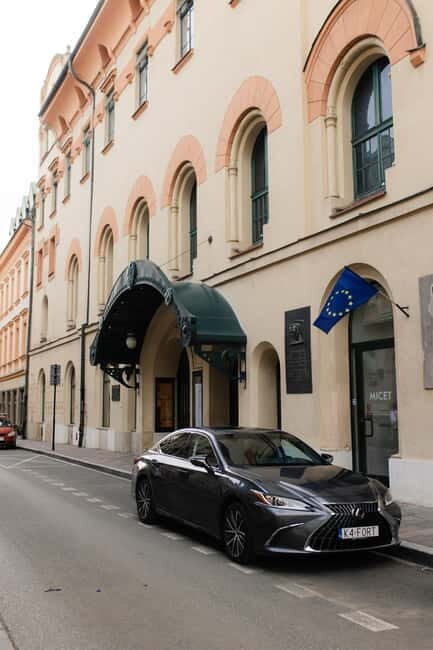
This experience includes private transport, drinking water, and entry tickets for the guided tours in English at both Auschwitz-Birkenau and the Salt Mine. It’s also listed as including skip-the-ticket-line.
For a 9-hour day, ticket friction can wreck your momentum. Skip-the-line access and private transfer reduce the odds that you’ll lose time to paperwork, queues, and last-minute confusion.
The tour also allows you to bring your own food on the tour, which is practical. Even with a short break at Auschwitz, you’ll probably appreciate having a snack plan for the hours between stops.
Price and value: $335 per person, and what you should check
The price is listed at $335 per person for a total day of about 9 hours. That number isn’t cheap, so you should judge value the way you would judge any packed day trip.
Here’s what you’re paying for, based on the included elements:
- private transport from Kraków and back
- guided tours in English at both Auschwitz-Birkenau and the Wieliczka Salt Mine
- entry tickets and skip-the-line support
- drinking water
- English live guidance plus an English audio guide
So the value angle is not just “two attractions.” It’s the time management and the guide-led structure. On this kind of day, the difference between a smooth schedule and a chaotic one is huge.
That said, one caution from the experience feedback you can reasonably infer: some people found the booking service cost higher than booking similar access directly through local operators. I can’t verify exact current comparisons, but I do think it’s smart to price-check before you commit—especially if you’re booking well in advance and you see multiple English-guided options.
What to bring, and what gets left behind
You’ll want to bring:
- your passport or ID card (required)
- comfortable shoes (you’ll need them)
The rules also matter. The tour info says:
- no smoking
- no luggage or large bags
- no alcohol and drugs
There’s also an important identification detail: as required by Auschwitz-Birkenau Memorial and Museum, you must provide your full name and contact details when booking. Entrance may be refused if the name on the booking doesn’t match the name on your ID exactly. Tickets are non-refundable, so check spellings carefully.
If you’re the type who changes plans last minute, that “non-refundable” point is worth treating as serious. If you’re good with firm dates, the system works.
Who this tour suits best (and who should think twice)
This is a good fit if you want an organized, guided day with minimal stress and clear English support. It’s also ideal if you don’t want to plan transportation between Auschwitz and Wieliczka yourself.
It may be harder if:
- you’re sensitive to emotionally intense historical sites
- you struggle with long days that include both standing and walking
- you don’t handle stairs well (remember the 380-step descent in the mine)
On the flip side, if you like structure—getting picked up, entering with a group, and letting a guide handle the narrative—this setup can feel reassuring.
Should you book this Auschwitz + Wieliczka combo?
My take: book it if you want a guided day that connects two very different human stories without the logistics headache.
Choose this tour when:
- you value English guided interpretation at both locations
- you want private transport from Kraków
- you’re comfortable with a long 9-hour schedule
- you’re ready for Auschwitz to be the emotional center of the day
Think twice if:
- you have flexibility needs or might change dates
- you need lots of quiet and unstructured time (this is guided and scheduled)
- stairs and underground walking could be a problem for your body
If you do book, the best move is simple: double-check your name spelling against your ID, wear proper shoes, and bring a small food plan so you don’t spend your mental energy later. Then let the guide-led pacing do its job: clarity for history above ground, wonder below it.
FAQ
How long is the Kraków to Auschwitz and Wieliczka tour?
The total duration is listed at 9 hours. Starting times vary, so you’ll need to check availability for the exact departure window.
Is pickup included from Kraków?
Yes. Pickup is included from Kraków hotels and accommodation.
What tours are included at Auschwitz-Birkenau?
You get guided tours at the Auschwitz-Birkenau Memorial and Museum, including a 2-hour guided tour and then a further guided visit to Auschwitz II-Birkenau.
How long is the Wieliczka Salt Mine guided portion?
The Wieliczka Salt Mine guided tour is listed as 2.5 hours.
How deep do you go in the salt mine?
The tour information says you descend 380 steps to the first level, about 210 feet (64 meters) below ground.
What is included for language and guidance?
The live tour guide is in English, and an English audio guide is also included. Entry tickets for guided tours are included in English as well.
What should I bring with me?
Bring your passport or ID card and comfortable shoes.
What items are not allowed?
No smoking, and no luggage or large bags. Alcohol and drugs are also not allowed.
What happens if the name on my booking doesn’t match my ID?
The Auschwitz-Birkenau requirements state entrance may be refused if the name provided on the booking is not identical to the name on the ID used for entry.
Can I bring my own food?
Yes. You’re welcome to bring your own food on the tour.