Human history gets heavier at Auschwitz-Birkenau. This Krakow day trip brings you to the Auschwitz-Birkenau Memorial and Museum with transportation, help getting inside smoothly, and a structured starting point so you can explore on your own. Expect a long, quiet kind of day.
I like two things a lot: first, the meeting with an English-speaking licensed expert who helps you understand the layout before you walk; second, the self-guided time after that, when you can go through Auschwitz I and Birkenau at your own pace instead of feeling rushed.
One drawback to think about: this is a long visit and the content is emotionally intense. You’ll need moderate physical fitness, and you should be ready for lots of standing and walking while your brain keeps processing what you’re seeing.
In This Review
- Key things that make this Auschwitz-Birkenau trip work
- Krakow to Oświęcim: the drive that sets the tone
- Entry and orientation: how Auschwitz I starts to click
- Auschwitz I walk: what you’ll notice when you’re not rushed
- The transfer to Birkenau (Auschwitz II): from core to scale
- Birkenau exploration: using self-guided time well
- Timing and pacing: what 7 to 8 hours feels like
- Transport from DISCOVER CRACOW: comfort plus order
- Price and value: why $38.05 is a budget win
- Who should book this Auschwitz-Birkenau self-guided day trip
- Should you book?
- FAQ
- What time does the Auschwitz-Birkenau self-guided tour start in Krakow?
- How long is the full day trip?
- What’s included in the price of $38.05?
- Is the visit fully guided by an official guide?
- What will I see at Auschwitz I and Birkenau?
- Is there walking involved?
- Can I cancel or change the booking?
Key things that make this Auschwitz-Birkenau trip work
- Licensed expert start: you’re shown how the site is laid out so your visit makes sense fast.
- Real self-guided walking: after the intro, you move independently through Auschwitz I and Birkenau.
- Two camp sections, one day: you get Auschwitz I plus Birkenau (Auschwitz II) without splitting into different trips.
- Small group size: capped at 30 travelers, which helps the day feel organized.
- Comfort on the road: air-conditioned transport from Krakow and back.
- Guided + reflective rhythm: guided orientation first, then time to absorb and reflect on your own.
Krakow to Oświęcim: the drive that sets the tone
The day starts in Krakow at Pawia 18B (31-154). You meet your tour leader and head out at 2:30 pm in a comfortable, air-conditioned minivan or bus. The ride takes about 1.5 hours, which matters because Auschwitz-Birkenau is not a place where you want to arrive frazzled.
Once you reach Oświęcim, you get a short break—enough time to stretch, grab a coffee, or just take a breath before the first part of the visit. This is one of those practical pauses that helps. It lets you settle your body first, so later you can focus on the exhibits instead of on logistics.
Your tour leader then helps you move into the museum area smoothly and explains what you’ll see. That initial hand-holding is valuable because Auschwitz isn’t laid out in a simple “walk in, walk out” loop. Having someone help you get your bearings early makes the rest of the experience far more manageable.
Other Auschwitz I and Birkenau combined tours in Krakow
Entry and orientation: how Auschwitz I starts to click
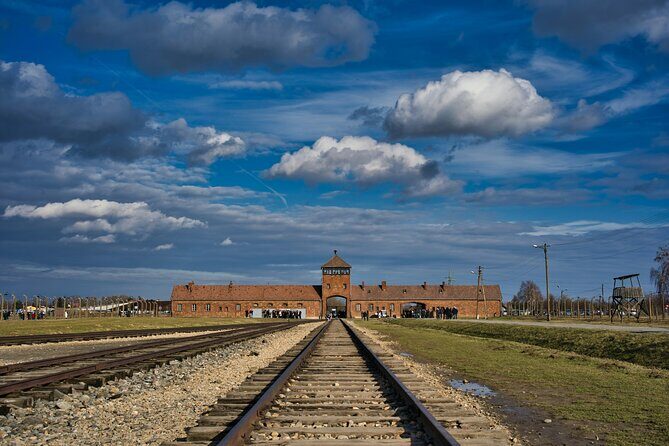
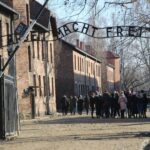
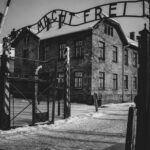
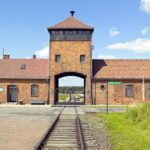
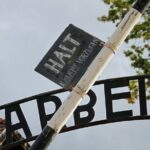
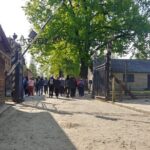
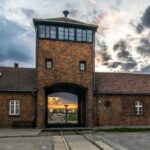
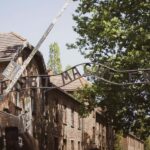
At Auschwitz I, you enter through the famous gate with the inscription Arbeit Macht Frei. The experience begins here for a reason: Auschwitz I is the earlier core of the system, and seeing this section first helps you understand what the memorial represents and how it evolved over time.
A licensed expert—English-speaking—meets you and leads you through a guided portion that focuses on the site layout. You’ll get help understanding where to look, what each area is, and how the preserved parts connect. After that, you’ll receive entry tickets that allow you to explore independently.
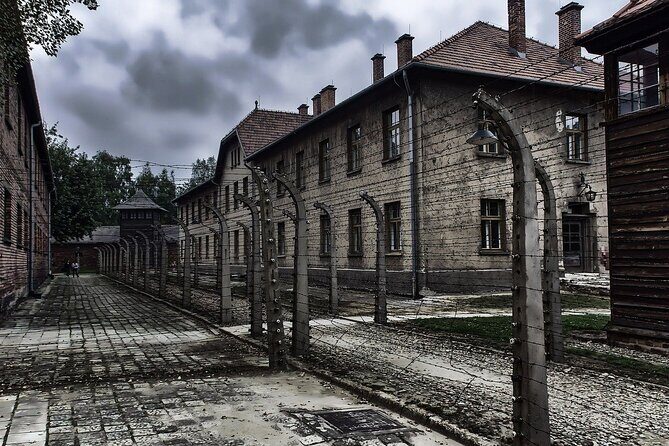
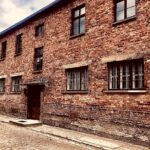
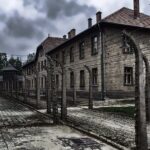
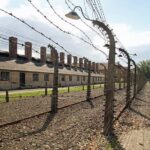
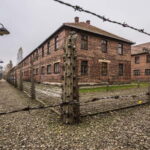
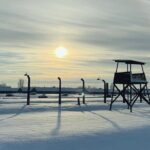
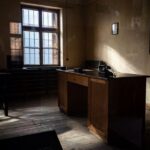
In Auschwitz I, you’ll be able to see preserved barracks, original fences, watchtowers, and exhibitions. Even though you’re walking on your own, the orientation matters. It turns a grid of buildings into a story you can follow—what the camp was used for, how prisoners were processed, and how the site functions today as a memorial and museum.
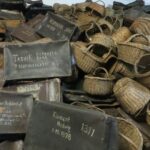
This is also where the day’s emotional weight lands. One reason people feel shaken here is simple: you’re no longer reading a summary. You’re standing near the physical remnants and the museum displays that explain what happened. I found it’s the combination of guided structure and self-guided time that makes this easier to process.
Auschwitz I walk: what you’ll notice when you’re not rushed
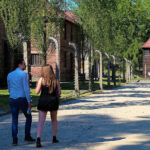
Once you’re on your own, you can slow down in the places that demand attention. That sounds basic, but it’s key. If you’re pulled along too quickly, you miss the small connections—how fencing lines guide your movement, how watchtowers frame what prisoners would have seen, and how exhibits build the timeline.
Auschwitz I began in 1940, using old Polish army barracks. It was initially intended for Polish POWs and political prisoners, and it operated until liberation by Soviet forces in 1945. During that time, more than 1.5 million prisoners were brought to Auschwitz, and 1.1 million were exterminated. The museum keeps this history clear and documented, and your independent pacing gives you time to absorb without feeling like you’re “on schedule” for someone else’s speed.
This is where I’m glad the tour includes entry tickets that let you keep moving. You’re not waiting in line as part of a constant group shuffle. You can stop when you need to stop, then continue when you’re ready.
The transfer to Birkenau (Auschwitz II): from core to scale
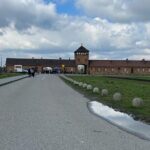
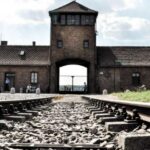
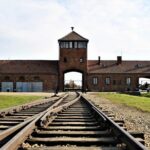
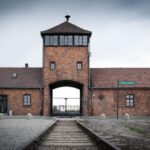
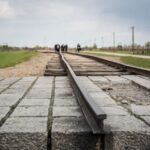
After Auschwitz I, you shift to Brzezinka, home to Birkenau (Auschwitz II)—the larger extermination camp within the Auschwitz complex. The drive from Auschwitz I to Birkenau is short enough to keep the momentum, but long enough that your brain gets a moment to reset before the next shock.
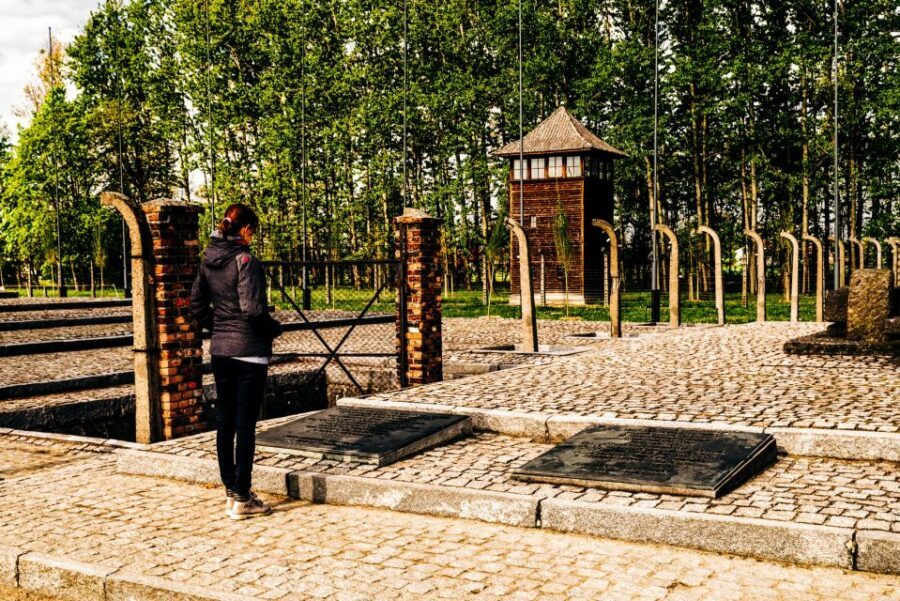
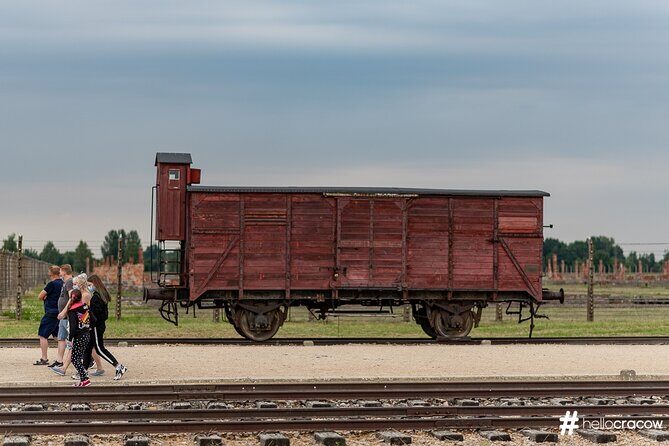
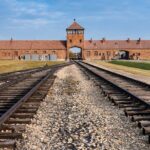
Birkenau’s story starts differently. It began as a camp for Soviet POWs, then became a concentration camp for prisoners of multiple nationalities and a central hub for the extermination of Jews. Construction began in October 1941, and it was built by slave laborers on the site of the displaced and largely destroyed village of Brzezinka, just three kilometers from Auschwitz I.
The camp was designed to hold up to 125,000 prisoners at a time. That number helps explain why Birkenau hits differently. In Auschwitz I, you have preserved buildings and smaller, tighter spaces. In Birkenau, the scale and layout make the system feel even more methodical and overwhelming.
As you walk, you’ll be better positioned to understand why Birkenau is often described as the place where the world looks too big to comprehend. The self-guided format helps here. You can walk slower in the broad areas that make it hard to know where to look first.
Birkenau exploration: using self-guided time well
You’re not given an “official guide” walking continuously through Birkenau. Instead, the tour design gives you time to reflect and explore on your own after the orientation earlier in the day. That choice can be powerful—if you use it intentionally.
Here’s what helps you get more out of Birkenau: give yourself permission to take breaks. Don’t force continuous walking just to cover ground. If something in the exhibitions or preserved structures catches your eye, stop and read. If your emotions are high, step back and let your mind catch up. Birkenau isn’t a checklist.
Also, remember that many parts of the museum experience depend on how you move through space. Even when you’re alone, you’re still supported. Your tour leader earlier explained the layout of Auschwitz I and Auschwitz II so you’re not standing there wondering what you’re looking at.
The day’s pacing—guided start, self-guided middle—lets you absorb the story in layers rather than in one rushed sweep.
Other Auschwitz tours from Krakow in Krakow

Timing and pacing: what 7 to 8 hours feels like
This trip runs about 7 to 8 hours. The schedule is built with breaks so you’re not constantly moving. You get a brief break in Oświęcim before the museum portion, then after the visit you rejoin the group.
There’s also time built into the end of the day: you’ll have at least 15 minutes to stop at a bookstore or take a break, then you return to Krakow after about 1.5 hours on the road. The tour leader doesn’t keep you trapped in the van right up to departure, which makes the closing minutes feel more human.
One practical note: time may change due to the schedule at the Auschwitz museum. That’s worth accepting before you plan anything else that evening. If you have a tight dinner reservation right after you expect to return, I’d leave buffer.
Physically, the day is best for people with moderate fitness. You’ll likely do a lot of walking and standing. If you’re someone who needs frequent seated breaks, consider that this route may test your stamina.
Transport from DISCOVER CRACOW: comfort plus order
The provider for this experience is DISCOVER CRACOW. The ride is in a comfortable, air-conditioned minivan or bus, and the group size is capped at 30 travelers. That cap matters more than it sounds: a smaller group is usually easier to manage at museum entrances and during transitions.
Your tour leader—English-speaking—handles the practical flow: meeting you in Krakow, helping you board, and giving you the initial orientation once you arrive. This is the part people don’t always notice in day-trip reviews, but it’s where “easy day” becomes “possible day.” You’re not trying to figure out where to go in a high-emotion setting.
When you finish, the experience ends back at the meeting point in Krakow. So you’re not left searching for a return plan after a heavy day.
Price and value: why $38.05 is a budget win
At $38.05 per person, this is priced like a value-focused day trip. And for that price, you’re not just buying transport. You’re getting transportation from Krakow plus entry tickets plus a tour leader who helps with the start of the museum experience.
That bundle is the key. Auschwitz-Birkenau requires more than “show up and walk.” Getting into the site smoothly and having an expert explain the layout saves you time and confusion, especially if you’re visiting without a full guide walking alongside you the whole time.
Also, the design is smart: you pay once for the full day plan, and then you get the freedom to explore independently. In other words, you’re paying for structure at the beginning and flexibility afterward.
If you’re trying to do Auschwitz-Birkenau on a realistic budget, this format is one of the more sensible ways to do it without feeling like you’re locked into a rigid script all day.
Who should book this Auschwitz-Birkenau self-guided day trip
I think this tour fits best if you want the right mix of guidance and freedom.
You’ll likely enjoy it if:
- you want an English-speaking, licensed expert start to help you understand the layout quickly
- you prefer walking independently through both Auschwitz I and Birkenau rather than staying in a constant group line
- you appreciate structure on the front end, then reflective time afterward
- you’re comfortable with a long day (about 7 to 8 hours) and moderate walking
It might feel less ideal if:
- you strongly need a continuous guide walking beside you during the entire visit
- you struggle with long periods of standing and walking in a museum setting
For most people, though, the rhythm works: you get help when it counts, then you get space when the experience demands it.
Should you book?
Yes, if you’re planning a Krakow trip and Auschwitz-Birkenau is on your list, I’d book this. The price is reasonable for what’s included, and the structure makes a difference: the licensed expert orientation helps you understand where you are and what you’re looking at, and the self-guided time gives you control over your pace in both Auschwitz I and Birkenau.
If you choose it, do yourself one favor: plan a calm evening back in Krakow. Don’t stack the day with extra activities. This is the kind of trip where the real impact follows you after you leave the grounds.
FAQ
What time does the Auschwitz-Birkenau self-guided tour start in Krakow?
The tour starts at 2:30 pm. Your meeting point is Pawia 18B, 31-154 Kraków, Poland.
How long is the full day trip?
It lasts about 7 to 8 hours.
What’s included in the price of $38.05?
The tour includes transportation from Krakow, entry tickets, and assistance from a tour leader. You also have time to explore Auschwitz I and Birkenau independently using the entry tickets.
Is the visit fully guided by an official guide?
You get a guided introduction with a licensed expert who helps explain the layout and the main areas to look at. After that, you have time to walk the memorial independently.
What will I see at Auschwitz I and Birkenau?
At Auschwitz I, you’ll see preserved barracks, original fences, watchtowers, and exhibitions. At Birkenau (Auschwitz II), you’ll explore the larger camp area in Brzezinka, which was central to the extermination of Jews.
Is there walking involved?
Yes. The tour notes a moderate physical fitness level is recommended, and the visit includes time walking through both parts of the memorial.
Can I cancel or change the booking?
No. This experience is non-refundable and cannot be changed for any reason.