REVIEW · KRAKOW
from Kraków: Auschwitz excursion with guaranteed Dutch guide
Book on Viator →Operated by DutchPoint Kraków · Bookable on Viator
Early departure, real education. This Auschwitz-Birkenau excursion from Kraków, run by DutchPoint Kraków, is built as a Dutch-language guided study day that moves through Auschwitz I, Birkenau, and Monowitz (Auschwitz III) in a clear order. It’s not a quick drive-by. It’s a long, guided route meant to help you understand what you’re seeing.
One thing I like is the guaranteed Dutch guide. In past groups, guides such as Wesley, Jeroen, Roland, and Marijke have led the story with calm pacing and lots of room for questions—exactly what you want at a place like this.
One possible drawback: the schedule is demanding. You’re looking at about 8–9 hours total (excluding travel time), an early start at 6:00 am, and a moderate fitness level with walking inside memorial areas.
In This Review
- Key points to know before you go
- A hard day, mapped out: what this tour actually gives you
- Price and what you’re paying for (it’s not just the van)
- Meeting point at DutchPoint Kraków: the calm start matters
- Stop 1: Auschwitz I Museum—barracks, deportations, and the Dutch/Belgian focus
- The Dutch and Belgian barrack detail
- Gas chamber visit (handled with care)
- Stop 2: Birkenau—Judenrampe selection, barracks, and the Dutch monument
- Starting at the Judenrampe area
- Barracks and living conditions
- Remains of gas chambers II and III
- The Dutch monument and a bookstore stop
- Stop 3: Monowitz (Auschwitz III)—Buna works and what you can still see
- Why Monowitz is different
- Transfers, restroom stops, and why the pacing is built for a long day
- Guides like Wesley, Jeroen, Roland, and Marijke: why the story style matters
- Who this tour is best for (and who might want to think twice)
- Should you book? My take on the value
- FAQ
- Is this tour guided in Dutch?
- What sites does the tour visit?
- How long is the excursion?
- When does it start and where do I meet?
- Does the price include tickets?
- Is transportation included?
- Are there restroom breaks?
- Is this tour suitable for children or people with mobility impairments?
- What’s included and what isn’t?
Key points to know before you go
- Guaranteed Dutch guide with a structured, respectful explanation at each stop
- Official museum tickets included for Auschwitz I and Auschwitz II-Birkenau
- Small group size (max 29) plus a tour guide system to keep sound clear
- You follow the historic route: from Auschwitz I to the Judenrampe area at Birkenau
- Monowitz (Auschwitz III) included, including the Buna works/factory complex area
A hard day, mapped out: what this tour actually gives you
Let’s be honest: Auschwitz is heavy. Your brain wants to skip ahead, your emotions want a break, and your feet still need to move. That’s where this tour’s structure helps. You start early from DutchPoint Kraków at Karmelicka 3, and you spend your time walking the sites in a logical progression instead of bouncing around on your own.
This is also not only about seeing. It’s about understanding. The tour is framed as a study tour (six hours of guided time, excluding travel), with short transfers, planned pauses, and a guide system so you can actually hear the explanation instead of straining in a crowd.
And it’s built for groups up to 29 people. That’s large enough for logistics, but small enough that questions don’t get swallowed.
Other Auschwitz tours from Krakow in Krakow
Price and what you’re paying for (it’s not just the van)
The price is $102.14 per person, and that can look steep until you break it down. You’re not just buying transport. You’re buying:
- Official entry tickets included for Auschwitz I and Auschwitz II-Birkenau
- Minibus transfers from Kraków
- A guide system (so the guide’s voice reaches you clearly)
- A full guided route covering Auschwitz I, Birkenau, and Monowitz
Also, this starts early with a planned schedule. On a day trip like this, time saved is real value. You’re paying to avoid the hassle of figuring out the route between memorial areas and the timing of museum entry.
If you’d rather build a DIY day, you can, but you’ll trade away the clear sequencing and the on-the-spot interpretation that helps you make sense of a place designed to confuse and destroy.
Meeting point at DutchPoint Kraków: the calm start matters
Your day begins at DutchPoint Kraków, Karmelicka 3, with a 6:00 am start. Early departure is not a gimmick here—it’s what makes the itinerary workable. It also helps you avoid the worst crowds later at the main memorial sites.
The meeting point being near public transportation is a small plus if you don’t want to rely on parking. And since the tour returns to the meeting point at the end, you’re not stuck arranging last-mile logistics.
Plan to arrive with enough time to check in and settle. At this kind of tour, your focus should be on the explanation, the objects, and the layout—not on scrambling to find the group.
Stop 1: Auschwitz I Museum—barracks, deportations, and the Dutch/Belgian focus
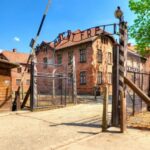
You begin at Auschwitz I (Miejsce Pamięci i Muzeum Auschwitz I). The bus transfer from Kraków to Oświęcim is about 80 minutes, followed by a 15-minute restroom/entry window.
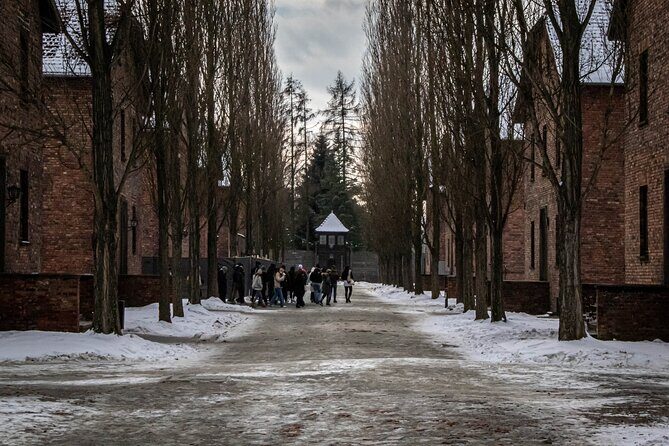
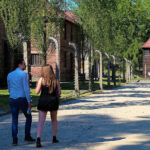
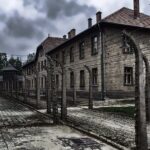
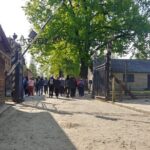
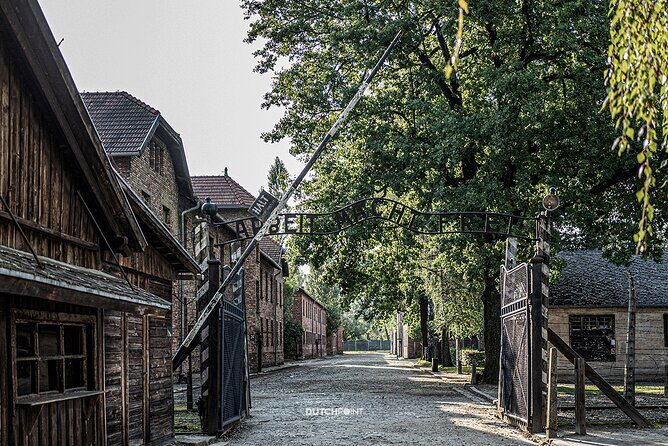
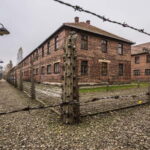
Once you’re inside, the guided visit is about 150 minutes. This is where you get the foundations: the story from the first deportations up to liberation on January 27, 1945. Expect the tour to walk you through the camp areas that are preserved and presented as a museum.
The Dutch and Belgian barrack detail
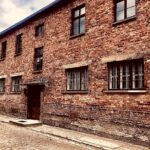
One of the more distinctive parts of this tour is the country-specific focus. The itinerary says the group will visit the Dutch barrack—and Belgian guests will visit the Belgian barrack. That matters because it turns a huge, impersonal system into something more human-scale. You’re still looking at mass persecution, but you’re also seeing how people from specific countries were processed and imprisoned.
Other guided tours in Krakow
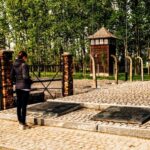
Gas chamber visit (handled with care)
The tour also includes passing through a gas chamber area at Auschwitz I. This is a sensitive stop, and the value of a guided day is that the guide sets the tone, places the information in context, and keeps the discussion factual rather than sensational.
A possible consideration here: Auschwitz I can be intense visually and emotionally, and there’s a lot to take in. If you tend to get overwhelmed easily, consider using the scheduled breaks instead of forcing yourself to push through every minute.
Stop 2: Birkenau—Judenrampe selection, barracks, and the Dutch monument
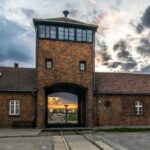
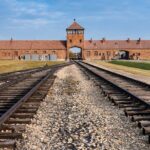
After Auschwitz I, you take a short break, then the group transfers by bus to Auschwitz II–Birkenau. The tour includes about 30 minutes transfer time and another break segment before you start walking the Birkenau area.
The Birkenau guided visit is about 90 minutes, with extra time built in for the Judenrampe area and for the return route.
Starting at the Judenrampe area
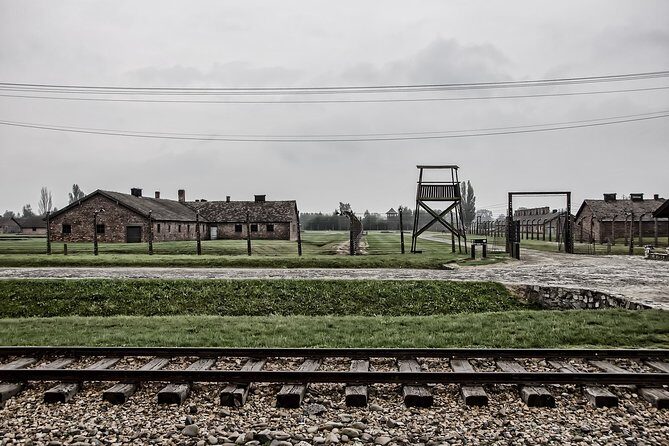
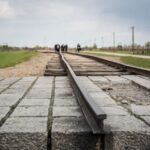
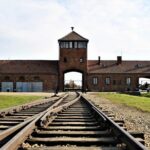
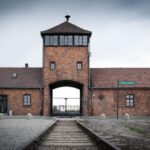
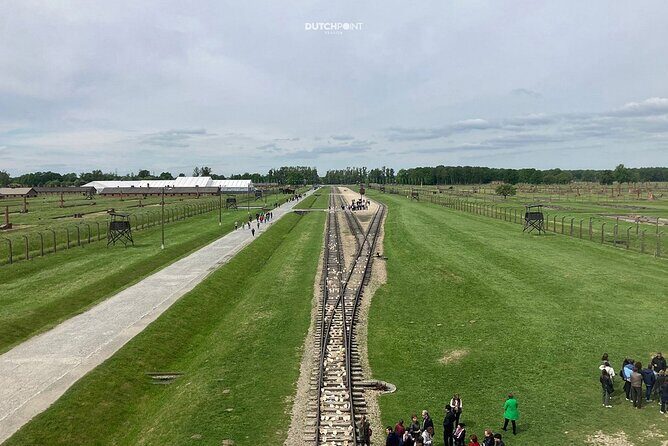
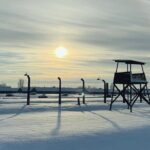
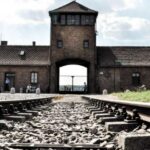
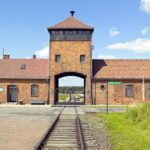
A key part of the itinerary is the visit to the Judenrampe, the place between Auschwitz I and Birkenau where trains arrived and selections took place. From there, you walk a route that’s meant to mirror what many people experienced.
This matters because Birkenau is enormous. Without context, it’s easy to feel lost—wide spaces, scattered remains, and too much to process. Starting with the selection point gives you a framework for what you’re seeing next.
Barracks and living conditions
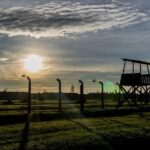
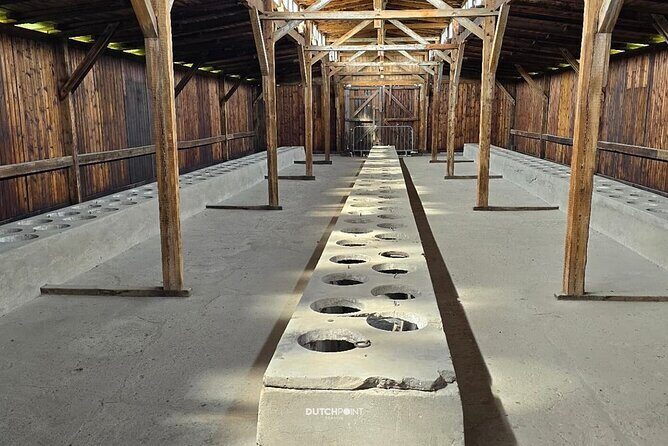
The tour then moves through wooden barracks that help show living conditions during the war years. This is one of the most educational transitions of the day. At Auschwitz I you often learn the structure and system; at Birkenau you begin to understand the scale of the living horror.
Remains of gas chambers II and III
You also visit the remains of gas chambers II and III. Because these are ruins rather than fully intact structures, the guide’s explanation becomes especially important. You’re not just looking at leftover walls—you’re connecting them to what they were designed to do.
The Dutch monument and a bookstore stop
On the Birkenau side, the itinerary includes a visit to the Dutch monument. It’s a pause for reflection that shifts from the machinery of genocide to memorializing those who suffered.
There’s also a brief stop for a bookstore visit at the gate area. If you want to take something back with you—documents, background reading, or survivor-focused materials—this is one of your chances.
Stop 3: Monowitz (Auschwitz III)—Buna works and what you can still see
The day’s final stop is Memoriale Auschwitz III (Monowitz), including the Buna works area tied to the Nazi factory complex.
Here the itinerary adds another transfer. You spend about 45 minutes transferring and then visiting the Auschwitz III-Monowitz area. The tour is designed to explain the massive factory complex and how the camp system supported forced labor.
Why Monowitz is different
Unlike Auschwitz I and Birkenau, Monowitz has a different kind of visibility. The itinerary notes that barracks are no longer visible, so what you see is more about the factories and some remnants such as bunkers that remain standing.
That change in what’s visible can be disorienting if you expect a layout like the other sites. The guide’s job here is crucial: to connect the remaining physical evidence to the reality of forced labor and daily brutality.
The visit ends at the Monowitz monument, which gives the day a final emotional and historical anchor.
Transfers, restroom stops, and why the pacing is built for a long day
This tour isn’t just three stops. It’s built around time boxes.
- You get five restroom stops during the day.
- There are structured breaks: after Auschwitz I before Birkenau, and at transitions.
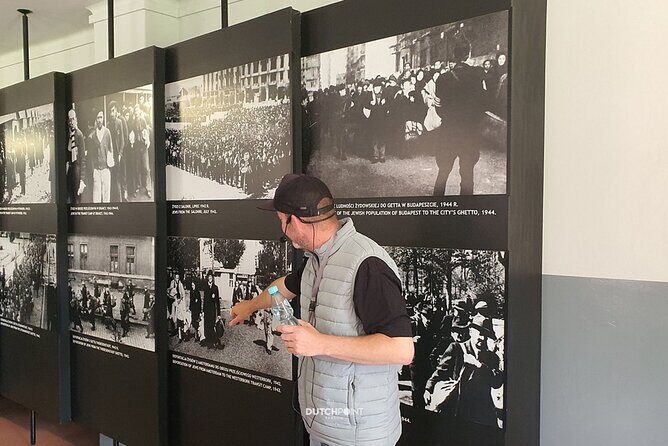
- The tour uses a tour guide system, which helps you stay in the group even when the memorial grounds get crowded.
Those sound like small details, but they matter a lot here. Auschwitz days can steal your energy. Good pacing protects your ability to absorb information instead of bouncing between stress, fatigue, and noise.
Also, with a start time of 6:00 am and a return to the meeting point, you’ll want to think like a commuter: snack if needed, water if you’re able, and keep your hands free (bag and coat management matter when you’re walking for hours).
Guides like Wesley, Jeroen, Roland, and Marijke: why the story style matters
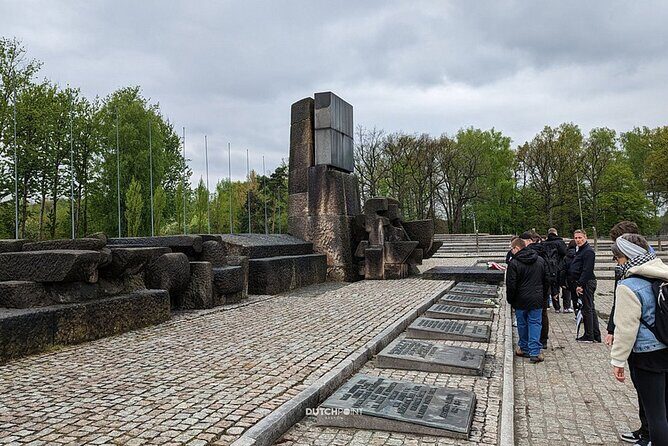
The reviews highlight a repeated theme: the guides don’t just recite dates. They explain in a way that keeps the day respectful and grounded.
Some groups have been guided by Wesley, Jeroen, Roland, and Marijke. What stands out is how they handle detail and emotion together—calmly, with space for questions, and with respect for the facts. That’s exactly what you want when you’re standing inside places built to represent systematic cruelty.
A small practical tip: if you have questions, this kind of tour is where you should use them. The guide system helps you ask without falling out of the group, and the pacing usually allows for answers without dragging the entire day off track.
Who this tour is best for (and who might want to think twice)
This experience is described as requiring moderate physical fitness, and it’s not suitable for children under 14 or for people with mobility impairments.
That’s not a judgment on your ability—it’s about how these memorial sites are laid out and how the route is walked.
You’ll likely enjoy this tour if:
- you want Dutch-language interpretation instead of piecing things together
- you prefer a structured timeline across Auschwitz I, Birkenau, and Monowitz
- you value having tickets handled and transfers planned
- you like asking questions and staying oriented as the story unfolds
You might want to reconsider if:
- you struggle with long days and very early starts
- you need low-impact movement or easier accessibility than what’s typically possible at these sites
Should you book? My take on the value
If your priority is a clear, respectful, Dutch-guided route that connects the sites into one coherent story, I think this is a strong booking. The guaranteed Dutch guide, the official tickets included, and the tour guide system make it feel like more than “transport plus entry.” You’re paying for interpretation and pacing.
On the other hand, this is not for people who want flexibility or who are looking for a short visit. It’s an early, long day at places that demand attention and emotional stamina.
My advice: book it if you want the structure. Bring your patience. Accept that the day will be heavy, and let the guide do the work of making the layout understandable.
FAQ
Is this tour guided in Dutch?
Yes. The tour provides a guaranteed Dutch guide, and the study tour is Dutch-speaking.
What sites does the tour visit?
You visit Auschwitz I Museum, Auschwitz II–Birkenau (including the Judenrampe area and remains of gas chambers II and III), and Auschwitz III (Monowitz), including the Buna works memorial.
How long is the excursion?
The tour duration is about 8 to 9 hours, with about 6 hours of guided study time excluding travel time.
When does it start and where do I meet?
The meeting point is DutchPoint Kraków, Karmelicka 3, 31-133 Kraków, and the start time is 6:00 am.
Does the price include tickets?
Yes. Official tickets for Auschwitz-Birkenau State Museum are included for Auschwitz I and Auschwitz II-Birkenau. Auschwitz III-Monowitz admission is listed as free.
Is transportation included?
Yes. The tour includes transfer by (mini)bus from Kraków and transfers between the memorial sites during the day.
Are there restroom breaks?
Yes. The itinerary includes five restroom stops during the excursion.
Is this tour suitable for children or people with mobility impairments?
No. It’s listed as not suitable for children under 14 and not suitable for people with mobility impairments.
What’s included and what isn’t?
Included: guaranteed Dutch guide, official tickets (for Auschwitz I and II), transfers by (mini)bus, tour guide system, and the guided study tour time. Not included: breakfast box or lunch box (optional) and tip.