REVIEW · OSWIECIM
Auschwitz-Birkenau – Skip the Line Tickets
Book on Viator →Operated by Time4Poland · Bookable on Viator
One sentence can change how you see history. Auschwitz-Birkenau is heavy, but this skip-the-line tour helps you make sense of it with a licensed guide and headset audio while you move through both parts of the site. I especially like how the experience is structured, so you spend less time figuring out what to do and more time understanding what you’re seeing.
Two things I really like: the group stays small (up to 30) and you get a plan for how long to spend in Auschwitz I and Birkenau, which matters because the grounds are huge and emotions are running high. One possible drawback is pace and audio: some people have reported rushed walking and headset sound issues, so if you need slower momentum or perfect clarity, be ready to speak up early.
In This Review
- Key things to know before you go
- Why Auschwitz-Birkenau feels different with a guide
- Where to meet in Brzezinka (and how not to waste time)
- Auschwitz I: how the first 1.5–2 hours are meant to land
- Birkenau: why 60–75 minutes can feel short (and how to use it)
- Headsets and group size: hearing the story without getting lost in the crowd
- Price and value: is $48.15 worth it?
- The reality of pacing: what to do if your group moves too fast
- What to bring and how to prepare mentally
- Should you worry about booking problems or no-shows?
- Who this tour is best for
- Final call: should you book this Auschwitz-Birkenau skip-the-line tour?
- FAQ
- How long is the tour?
- How much time do I spend at Auschwitz I vs. Birkenau?
- Is admission included?
- Does the tour include skip-the-line entry?
- Will I be able to hear the guide?
- What’s included in the price?
- What’s not included?
- Where does the tour start?
- Is the group size limited?
- What if I need to cancel?
- Are service animals allowed?
Key things to know before you go
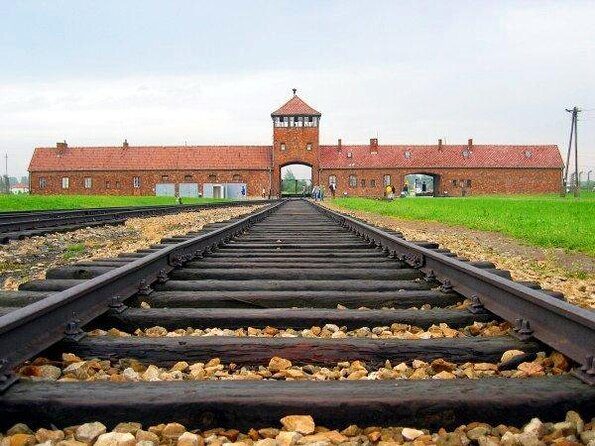
- Skip-the-line entry helps you avoid extra waiting at a site that’s crowded most days
- Headsets are provided so you can actually hear the guide, even in busy areas
- Time split is intentional: about 1.5–2 hours in Auschwitz I, then 60–75 minutes in Birkenau
- Small group size (max 30) makes it easier to ask questions
- Start in Brzezinka at Męczeństwa Narodów 14, with a local host guiding you to the official guide
- Admission is included, but transportation is not, so plan how you’ll get there
Why Auschwitz-Birkenau feels different with a guide
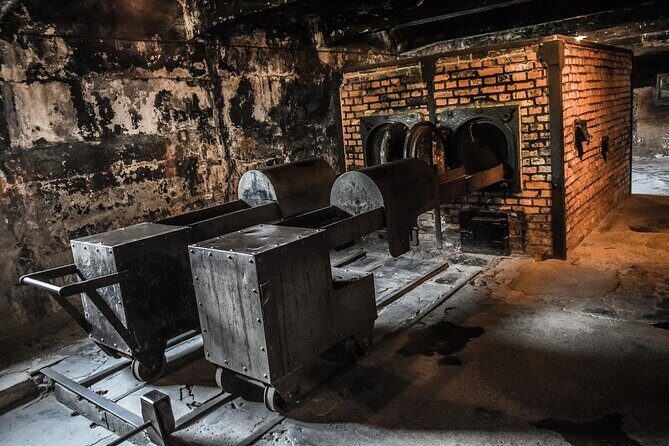
If you do Auschwitz-Birkenau on your own, you’ll still see the same buildings and artifacts. The difference is interpretation. A good guide helps you connect names, dates, and locations to what’s in front of you—without turning the visit into a history lecture that runs on autopilot.
This tour is built around three practical advantages. First, you get skip-the-line entry, which is more valuable here than almost anywhere else because lines can eat up precious daylight. Second, you’re not trying to match signs and captions while you’re emotionally overloaded. Third, you get a guide who can point out details you’d likely miss when you’re just trying to survive the moment.
And yes, it’s hard. That’s not a “review line.” It’s the purpose of the place. What you can control is how much you’re able to process. A guided visit gives you that structure, and structure is a kindness.
Other Auschwitz I and Birkenau combined tours in Oswiecim



Where to meet in Brzezinka (and how not to waste time)
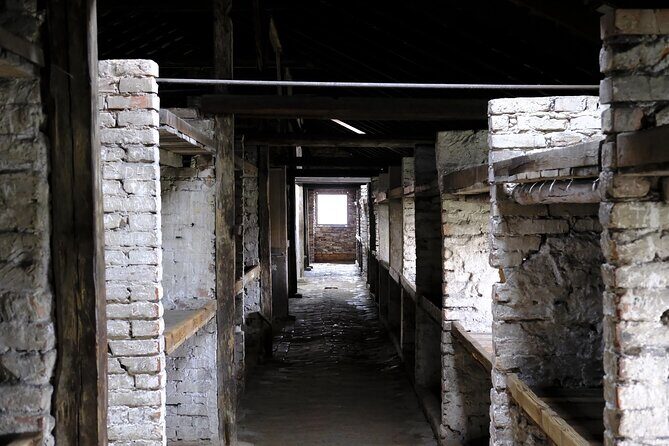
The tour starts and ends back at the meeting point in Brzezinka: Męczeństwa Narodów 14, 32-600 Brzezinka, Poland. You’ll also see a ticket redemption location listed at Więźniów Oświęcimia 55, 32-600 Oświęcim, Poland (at the memorial and museum). The key idea: show up for the meeting point, not the redemption address, unless your instructions specifically tell you otherwise.
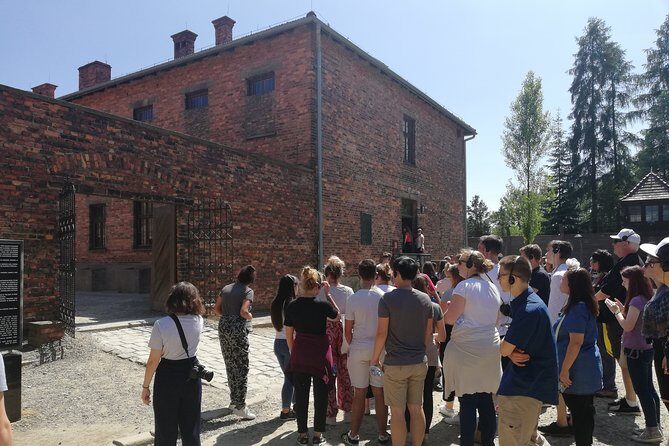
You’ll meet a local host at the start point. From there, you’re taken along to the official guide. That handoff matters because the whole area can be confusing if you’ve never been. It also helps you avoid the most common travel-day mistake: arriving early and then wandering around trying to figure out where the group is gathering.
A small practical tip: plan to arrive a bit early. Even a 10–15 minute buffer can help if your bus/train timing is off or if you need to locate the exact spot.
Auschwitz I: how the first 1.5–2 hours are meant to land
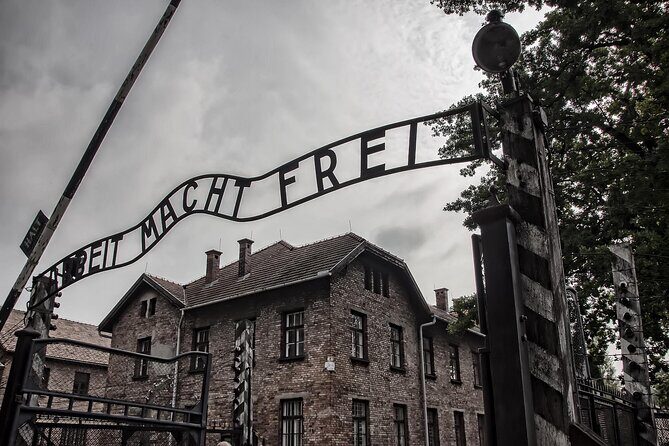
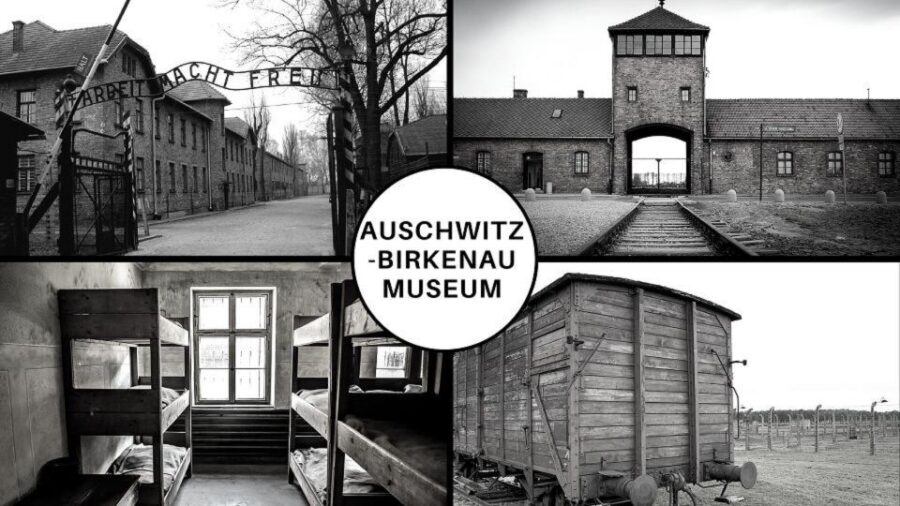
Auschwitz I is where the story gets anchored. You’ll spend about 1.5 to 2 hours here, moving through the core area with an official guide. This portion is typically where you’ll hear the most direct framing of what Auschwitz was, how it functioned, and how different parts of the system connected.
With a group tour, you’re not wandering freely. Instead, you follow the guide’s path. That’s good for two reasons. One, it keeps you from getting lost. Two, it prevents you from spending your limited time staring at one spot while missing other parts that explain the whole system.
There’s also an emotional reality to this segment: it’s dense. The guide’s job is to help you read the site without rushing it so fast that you only catch fragments. Some people have said certain tours felt quick. If that’s your fear—if you want time to sit with what you’re seeing—ask the guide early about pace. If your group is moving too fast for you, speaking up at the start is your best chance to adjust.
Birkenau: why 60–75 minutes can feel short (and how to use it)
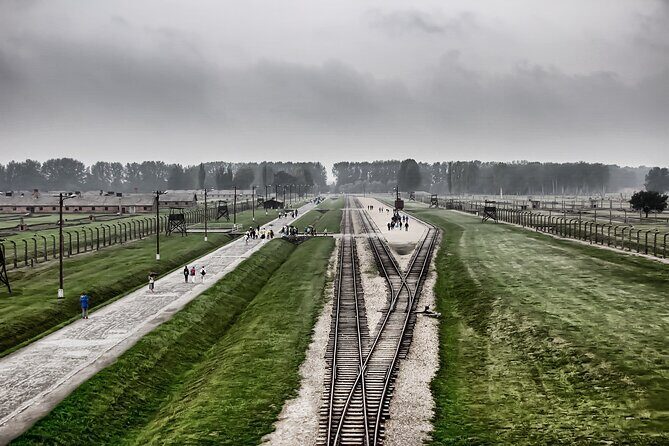
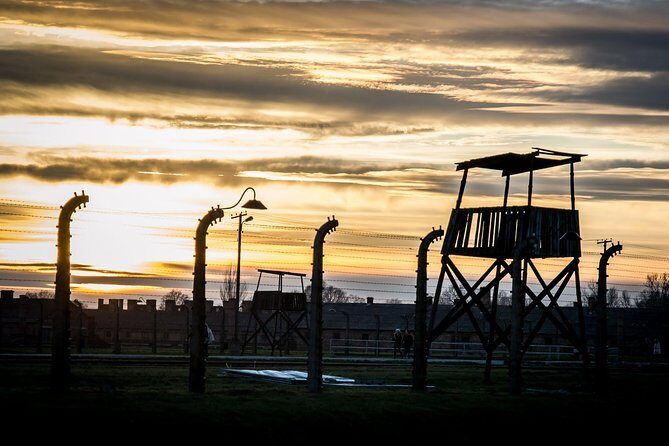
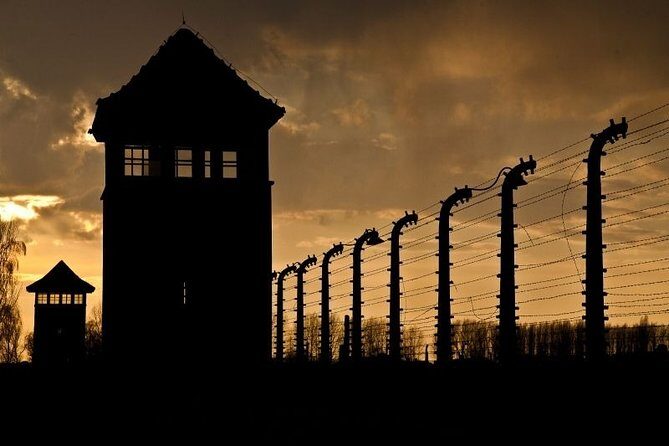
Birkenau (Auschwitz II) is where scale hits you like a wall. You’ll typically have 60–75 minutes here. That might sound short, but the site is vast, and the tour has to balance your time between the two areas.
In practice, this is where you want to let the guide’s explanations guide your attention. Don’t try to “see everything.” Instead, follow what the guide highlights—because the meaning is tied to how parts connect in space. Birkenau is not just lots of buildings; it’s a layout that tells a story about logistics, control, and the machinery of terror.
Here’s the other reason guides matter in Birkenau: the grounds can be emotionally disorienting. A good guide keeps you oriented, so you’re not just walking from one ruin to another with the same feeling repeating every ten meters.
One more thing: Birkenau is also where pace and terrain can feel more challenging. The tour is meant for travelers with moderate physical fitness, so plan on steady walking and uneven ground.
Headsets and group size: hearing the story without getting lost in the crowd
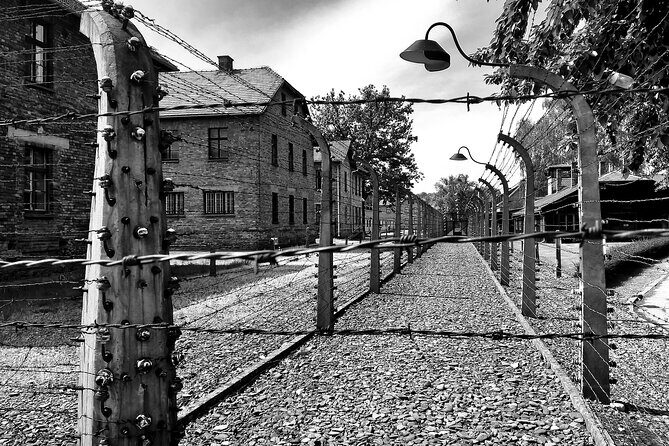
This tour uses headsets, which is a huge deal at Auschwitz-Birkenau. Crowds, wind, and distance can make a spoken explanation hard to catch. With headsets, you’re less dependent on being close to the guide—so you can stay focused on what you’re seeing instead of craning your neck.
Group size is capped at 30 travelers. That’s small enough to feel manageable, big enough that you won’t feel singled out. It’s also the sweet spot for getting answers without turning the visit into a line of silent foot traffic.
Still, be aware: a few people have reported headset audio problems like static. The fix is simple: when you receive the headset, test it right away. If you can’t clearly hear the guide, say so immediately. Waiting until later can turn the whole visit into a struggle.
Other skip-the-line Auschwitz tickets in Oswiecim
Price and value: is $48.15 worth it?
At $48.15 per person, this isn’t a bargain tour, but it also isn’t trying to squeeze maximum profit out of a captive audience. The value comes from what’s included:
- Licensed local guide
- Headset audio
- Admission included
- Skip-the-line entry (time saved where it matters)
That’s a meaningful bundle for a site where lines and confusion can drain your day. If you DIY it, you’ll still pay for tickets, and you’ll still spend time orienting yourself and figuring out what details are important. And when you arrive emotionally charged, time you save isn’t just time saved—it’s processing time gained.
What’s not included is transportation. That’s normal, but it can change the real cost. If you’re relying on taxis, plan carefully. If you’re taking public transit, you’re in the right area—this tour is listed as near public transportation.
If your time in southern Poland is tight, the skip-the-line plus guided structure usually beats doing this alone.
The reality of pacing: what to do if your group moves too fast
Because this tour is timed—roughly 3.5 hours of touring within a 4-hour total block—you’ll likely feel the pressure of a schedule. Most guides try to balance understanding with momentum. Even so, a few visitors have reported rushed pacing and limited time to read visual materials.
So here’s what you can do:
- Arrive calm and ready to move. If you’re stressed, you’ll feel rushed more sharply.
- If you’re the one needing slower pacing, tell the guide early.
- If the group is clicking past captions too quickly, prioritize the captions you see at the key stops rather than trying to read every label from start to finish.
This isn’t the kind of visit where “going at your own pace” always works with a standard group format. The best chance for a good experience is aligning your expectations with a guided, timed flow.
What to bring and how to prepare mentally
Even if you’re not a history buff, Auschwitz-Birkenau can hit you hard. I’d treat this like a “prepare your body and mind” appointment.
For your body: wear comfortable shoes and expect walking across areas that aren’t designed for a leisurely stroll. The tour notes moderate physical fitness is needed, so if long distances or uneven ground are an issue, plan accordingly.
For your mind: go in expecting sadness, not facts. You’ll leave remembering the human scale of what happened, not just dates. A guide helps, but you’ll still feel it.
Also, keep a valid form of ID/passport handy. One visitor stressed bringing a passport/ID, and for a memorial visit that’s a smart safety step.
Should you worry about booking problems or no-shows?
This tour involves a specific meeting point and a specific handoff to the official guide. That makes it great when everything matches up. When it doesn’t, you feel it fast.
A small number of experiences have described problems like missed pickups, confirmation mix-ups, or difficulty connecting with the operator. That doesn’t mean it will happen to you. It does mean you should protect your day with two simple habits:
- Keep your confirmation details accessible on your phone.
- Double-check you know the exact meeting point address before you travel there.
If you run late, it’s also worth arriving with enough buffer so you’re not trying to solve problems under time pressure.
Who this tour is best for
This works best if you:
- Want skip-the-line time savings and a clear plan
- Prefer a licensed local guide to connect what you see to what it means
- Are traveling independently but don’t want to build an Auschwitz-Birkenau “self-guided lesson” from scratch
- Like small groups and headset audio for clarity
It may be less ideal if you:
- Need very slow, flexible pacing
- Have significant mobility limits and need frequent pauses
- Have a strong preference for reading every caption at length without group timing pressure
If you’re unsure, choose the option that matches your pacing needs. In a place like this, your comfort affects your ability to take things in.
Final call: should you book this Auschwitz-Birkenau skip-the-line tour?
If you want the highest chance of a coherent, well-timed visit, I’d book this. The combination of skip-the-line entry, headsets, and an official licensed guide is practical value, not just convenience. You’ll spend less energy on logistics and more on understanding what you’re seeing.
But do go in with realistic expectations about pacing. Some people have had issues with speed or audio clarity, and because this is a timed group format, you may not get a slow-and-steady wandering experience. If you can adapt to a guided flow—and you’re ready to take the information in seriously—you’ll likely find this is one of the most worthwhile ways to see Auschwitz-Birkenau when time is limited.
FAQ
How long is the tour?
It runs for about 4 hours total.
How much time do I spend at Auschwitz I vs. Birkenau?
You’ll typically have around 1.5 to 2 hours at Auschwitz and 60 to 75 minutes at Birkenau.
Is admission included?
Yes. Admission ticket is included.
Does the tour include skip-the-line entry?
Yes. It includes skip-the-line tickets to help you avoid long waits.
Will I be able to hear the guide?
A headset is included to help you hear the guide clearly.
What’s included in the price?
A licensed local guide and a headset are included.
What’s not included?
Transportation is not included.
Where does the tour start?
The meeting point is Męczeństwa Narodów 14, 32-600 Brzezinka, Poland.
Is the group size limited?
Yes. The maximum group size is 30 travelers.
What if I need to cancel?
You can cancel up to 24 hours before the experience for a full refund.
Are service animals allowed?
Yes, service animals are allowed.