REVIEW · OSWIECIM
Auschwitz-Birkenau: Museum Entry Ticket with Guided Tour
Book on GetYourGuide →Operated by LegendaryKrakow · Bookable on GetYourGuide
One place can change how you see the past. This Auschwitz-Birkenau museum entry with a guided tour is powerful because you’ll cover both Auschwitz I and Auschwitz II-Birkenau with a live English guide, plus headsets so you can actually follow along as the group moves.
I especially liked the built-in structure: walk the ground where people were held, then move on to Birkenau’s railway area and the ruined gas chambers. One possible drawback is the pacing—on busy days it can feel a bit rushed, even when the guide is clearly doing their best to fit everything in.
In This Review
- Key points to know before you go
- Getting there: where the day starts and why you need your own transport
- Skip-the-line tickets, but not skip the rules: entry requirements that trip people up
- Auschwitz I walking tour: ground level history with headsets doing real work
- A short reset before Birkenau: why the 30-minute break is more than a pause
- Auschwitz II-Birkenau: railway platform, mass transport, and the ruins of gas chambers
- The guide and group reality: what English tours feel like in practice
- Price and value: is $52 worth it here?
- Who this Auschwitz-Birkenau tour suits best (and who might want another option)
- Should you book Auschwitz-Birkenau with a guided tour ticket?
- FAQ
- Where do I meet the guide?
- Is transport provided to Auschwitz and back?
- How long is the tour?
- What language is the guide?
- What’s included in the ticket price?
- What ID do I need to enter?
- Are there limits on bags and clothing?
Key points to know before you go
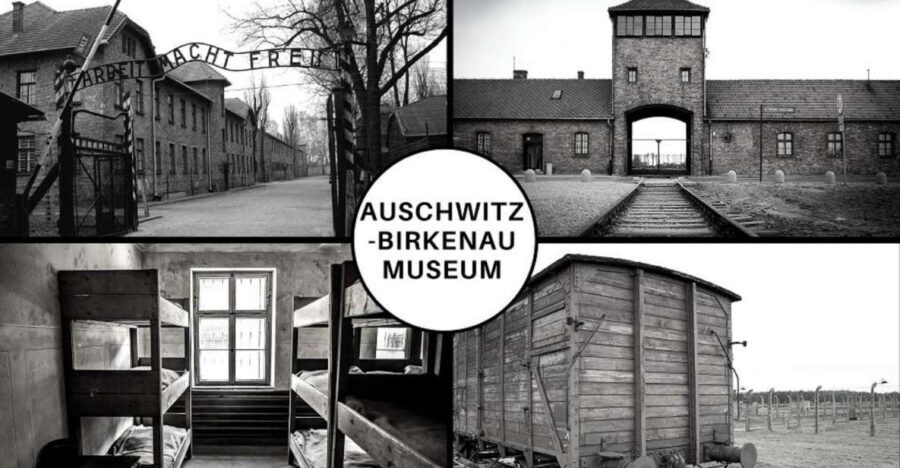
- Two sites in one guided loop: Auschwitz I first, then Auschwitz II-Birkenau after a short break
- Headsets included: you can hear the guide clearly even across wider paths and groups
- Skip-the-line entry: your ticket is ready so you can get moving faster at the gate
- See the major landmarks: the entrance gate, barracks, and Birkenau’s railway platform area
- English live guide: the tour is in English, with headsets focused on audio clarity
Getting there: where the day starts and why you need your own transport
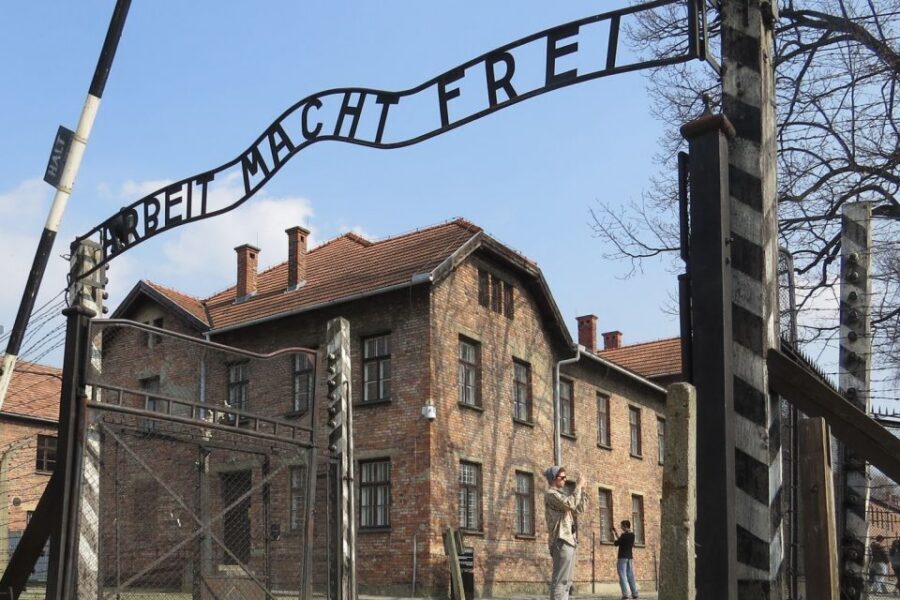
This tour runs from the Auschwitz-Birkenau Memorial and Museum area in Poland’s Lesser Poland region. The key practical point: you use your own transport to get to Auschwitz and back. In other words, this is not a full-day coach from Krakow or Warsaw; it’s a museum guided experience built around your arrival.
You’ll start at the Centrum Obsługi Odwiedzających Muzeum Auschwitz-Birkenau (Visitor Support Center). Meet your guide at the visitor center near the gate, by the information boards next to the parking. Aim to be there early enough to find the meeting spot and settle in—entrance procedures can take time, and you don’t want to walk in stressed.
Also plan your expectations for the timing. The tour duration is listed as 210 minutes, but the exact time can be approximate and can shift by as much as 4 hours. That matters because it affects how you schedule the rest of your day for eating, trains, or onward travel.
Other Auschwitz I and Birkenau combined tours in Oswiecim



Skip-the-line tickets, but not skip the rules: entry requirements that trip people up
Your ticket includes skip-the-line entry, which is genuinely valuable here. Auschwitz-Birkenau is an emotional place, and waiting around outside with no clear plan drains your energy before you even start.
That said, the museum has strict entry rules. You’ll need a passport or ID card, and the name on your booking must match the name on your ID exactly. If your name doesn’t match perfectly, entrance might be refused—so it’s worth double-checking spelling, accents, and middle names when you book.
You also need to think about what you bring:
- Your maximum bag/purse/backpack size is 30 × 20 × 10 cm
- No luggage or large bags
- No weapons or sharp objects
- Dress codes matter: no shorts and no sleeveless shirts
Comfort helps too. You’ll be doing a fair amount of walking on uneven ground and across large memorial spaces, so bring comfortable shoes and plan to keep moving at a steady pace.
One last thing that affects your decision: this is non-refundable. So if your trip schedule is shaky, make sure you’re ready to commit to the booked date and time.
Auschwitz I walking tour: ground level history with headsets doing real work
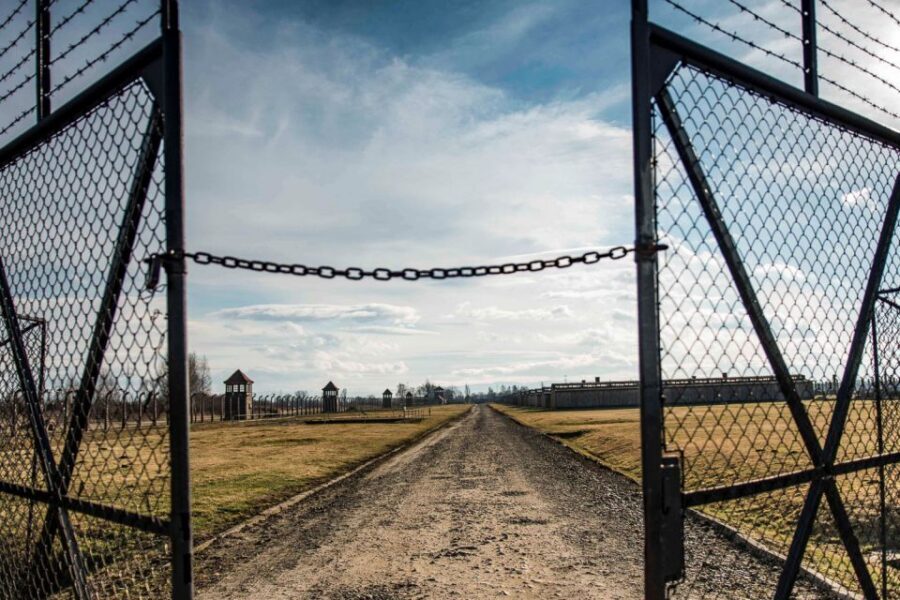
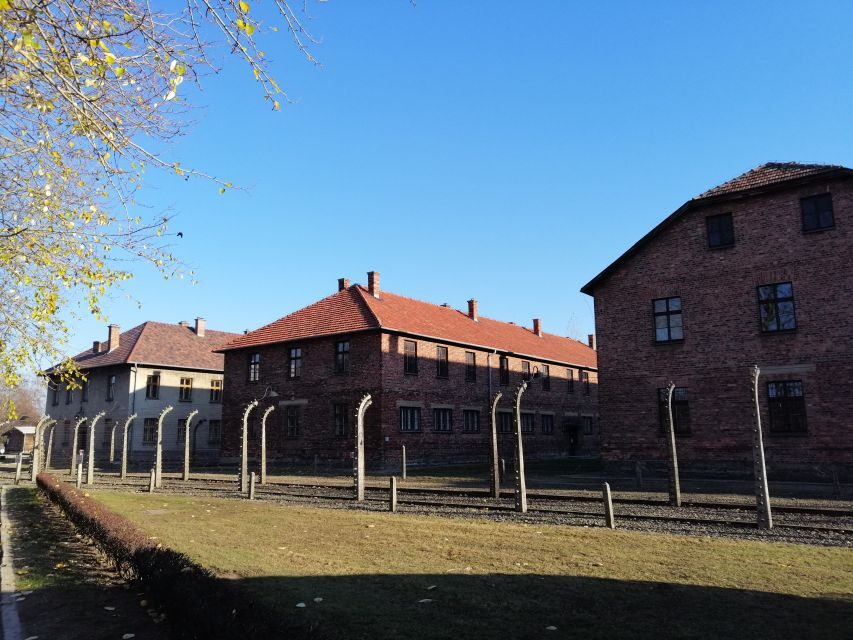
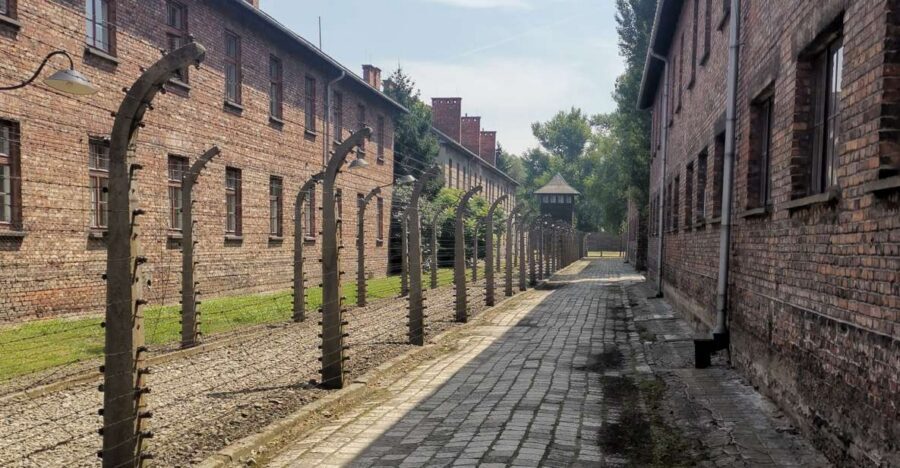
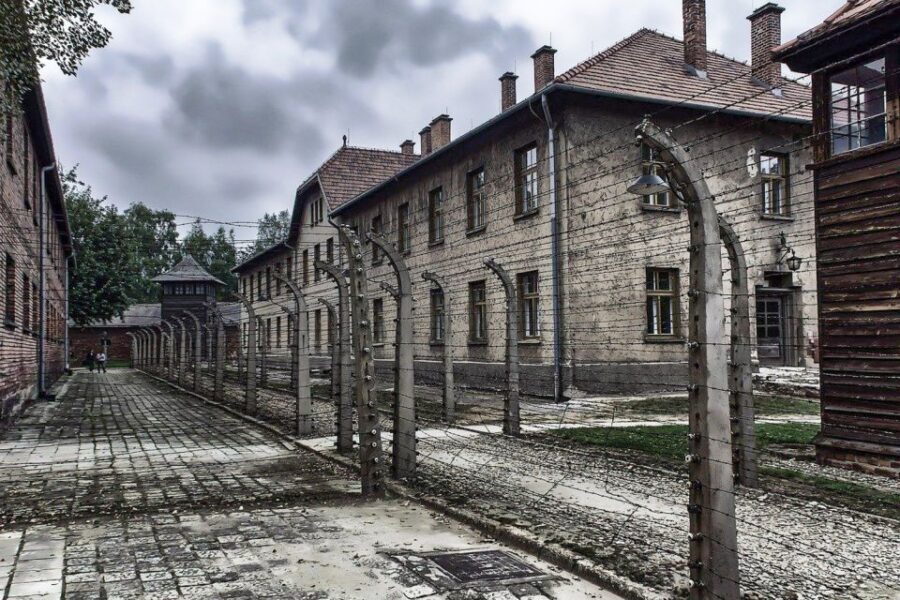
Your guided visit begins inside Auschwitz I, the original camp built in 1940 on the suburbs of Oswiecim. The walk here is listed at about 105 minutes, and it’s where the tour builds context fast.
You’ll get two things at once:
1) the physical sense of place—walking through the former camp ground
2) the informational layers through exhibitions presented in the barracks where people lived
This is where the headsets earn their keep. The tour includes headsets provided to you, and that’s not a small detail. As you move farther from the guide and the group stretches out, hearing the guide clearly can be the difference between understanding what you’re seeing and just passing by as a bystander. With headsets, you can focus on what matters instead of trying to catch words over footsteps.
You’ll also see core elements tied to Auschwitz I’s layout. The experience is designed so you notice the entrance area, then move through the camp structures and exhibitions that explain what happened there. The guide’s job is to connect the buildings to the human reality—how people were kept here, how many were affected, and the sheer scale.
The memorial’s own figures shared during the visit are staggering: estimated deaths are over 1.5 million people, representing 28 nationalities, and nearly 90% were Jews. Hearing those numbers in the location where they matter makes them harder to forget, and that’s exactly the point of this place.
A possible drawback you should accept up front: this is emotionally heavy, and the tour structure is still a timed schedule. If you’re the type who needs extra time to sit with what you’re seeing, you may find yourself wishing for slower moments, especially on the first site.
A short reset before Birkenau: why the 30-minute break is more than a pause
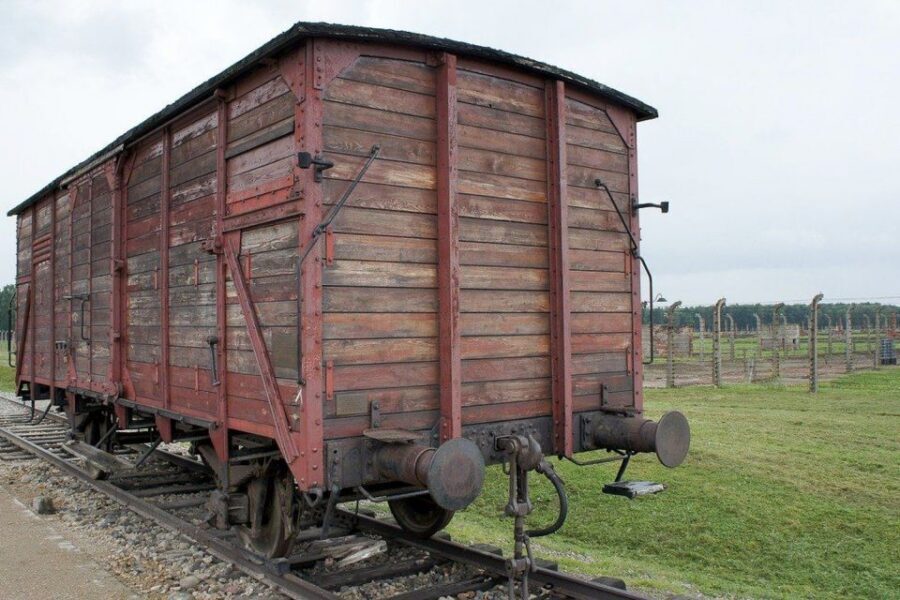
After Auschwitz I, you’ll get a short break—listed as 30 minutes—before continuing to Auschwitz II-Birkenau. There’s a “drive” step between sites in the experience flow, so plan to stay flexible during the transition.
This break matters for practical and mental reasons:
- Practically, it’s your chance to use the restroom, drink water, and regroup without losing the tour’s rhythm
- Mentally, it’s a moment to reset before you go into a space even larger and more spread out
Birkenau changes the feel of the story. Auschwitz I is dense and built around original camp structures. Birkenau is about scale—transport into the camp area and the vastness of the holding zone. Taking a short pause here helps you switch gears without getting totally overwhelmed too fast.
Auschwitz II-Birkenau: railway platform, mass transport, and the ruins of gas chambers
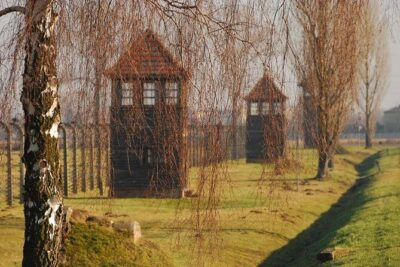
Next comes Auschwitz II-Birkenau, with about 75 minutes of guided walking. This is the area most people picture when they hear the name Auschwitz, and it’s also where you’ll see the infrastructure tied to mass transport.
You’ll follow the guide along the railway that facilitated transportation to the other part of the camp. This is one of the clearest “see it, understand it” parts of the visit. The railway lines aren’t just scenery—they explain how prisoners were moved at a scale designed for the worst outcomes.
From there, you’ll see the ruins of gas chambers, described in the tour context as places where people were taken and removed on a mass basis. The experience doesn’t ask you to guess. The guide connects what you see—ruins, outlines, surviving traces—to the broader reality of what those areas were used for.
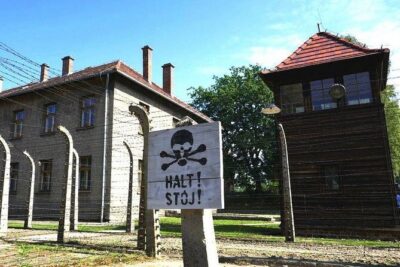
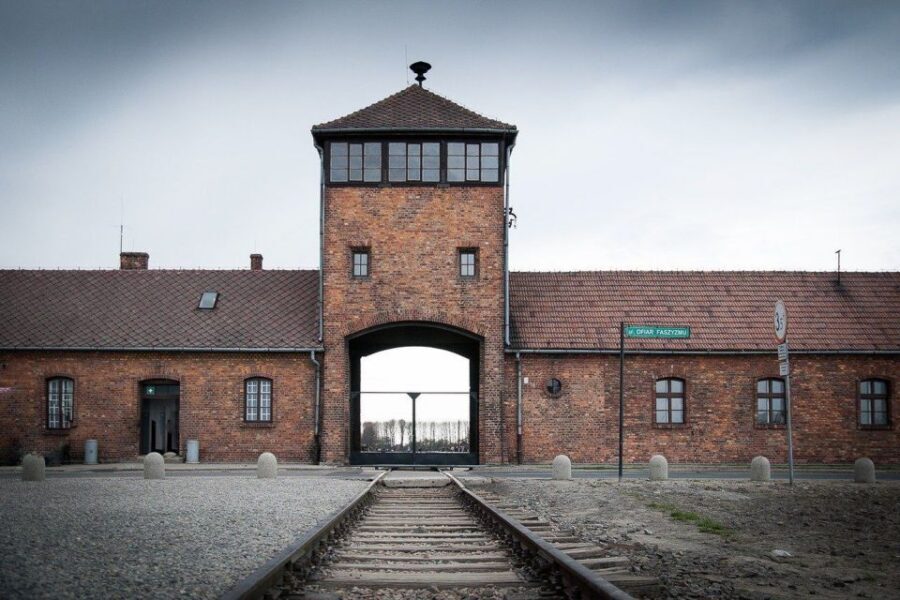
Also look for the tour’s visual targets: the visit is described to include the infamous entrance gate, plus barracks areas and the key Birkenau landmarks. Seeing all of these within one guided flow helps you build a clear map in your head, instead of leaving with a set of unconnected images.
Emotionally, this is the part that can hit hardest. It’s not a “quick stop.” Give yourself permission to take it slowly when you need to, even if the group keeps moving.


The guide and group reality: what English tours feel like in practice
The tour includes a live guide in English, and the headsets help you hear clearly. That means the guide’s narration stays understandable even when the group size grows or paths separate.
Still, there’s one reality to plan for: English is the guide language. If your group is mixed and several people aren’t comfortable with English, some details may be harder to follow. In one example of how this can play out, a group where most people spoke Dutch still had an English guide, and not everyone picked up everything being said. Headsets help with audio clarity, but they don’t replace translation.
On the other hand, a strong guide can make the visit feel deeply human. One guide approach described as especially moving was bringing a personal connection to the camps and speaking from the heart. When that happens, it elevates the tour from facts on walls to meaning you can carry out with you.
You should also expect the group pace to be set by the memorial’s visitor service. The pace and duration are determined there, not by the guide alone.
Price and value: is $52 worth it here?
At $52 per person, the value hinges on what you’re getting versus what you’d do on your own.
What you’re paying for:
- Skip-the-line entry
- A guided group tour with a live English guide
- Headsets, which improve understanding when sound carries poorly across large areas
What you’re saving:
- Time spent figuring out where to go and when to move
- The mental load of trying to interpret key sites without narration
In a place like Auschwitz-Birkenau, interpretation matters. You can walk the grounds on your own, but the guided framework helps you connect each building and area to what happened there, and it helps your visit stay coherent as you move from Auschwitz I to Birkenau.
So yes, I think it’s good value if you want structure and clarity. If you’re the type who prefers private pacing and lots of independent time, you might decide a different format fits better. But if your priority is a guided, informed route across both major sites, this price reflects what you’re buying: access plus guided meaning.
Who this Auschwitz-Birkenau tour suits best (and who might want another option)
This experience is listed as not suitable for children under 14. It’s also listed as not suitable for people with mobility impairments, which you should take seriously given the walking involved across large memorial grounds.
It’s a strong fit if:
- You want to see both Auschwitz I and Auschwitz II-Birkenau in one coordinated day flow
- You appreciate a guided explanation with headsets
- You want major landmarks covered—entrance gate, barracks, railway platform, and gas chamber ruins
It may not be the best fit if:
- You need step-by-step accommodations for mobility constraints
- You need more than the scheduled time to process what you’re seeing on-site
If you’re sensitive to intense historical material, plan extra recovery time afterward. You won’t feel “done” after leaving these grounds.
Should you book Auschwitz-Birkenau with a guided tour ticket?
Book this tour if you want the simplest path to a meaningful visit: skip-the-line access, headsets, and a live English guide that carries you through Auschwitz I and Auschwitz II-Birkenau without you having to guess your way between the biggest sites. At $52, it’s also hard to beat on value, especially compared with the time and stress you’d save.
Don’t book it expecting a casual sightseeing outing. This is heavy, timed, and rule-based. If you’re ready to follow the schedule, stand and walk through the memorial spaces, and let the guide’s narration shape what you understand, you’ll get the experience the tour format is built for.
FAQ
Where do I meet the guide?
Meet your guide at the Auschwitz Birkenau Museum Visitor’s Center. Look for the information boards right by the gate leading to the parking.
Is transport provided to Auschwitz and back?
No. You’ll use your own transport means to get to Auschwitz and back.
How long is the tour?
The total duration is listed as 210 minutes. The exact time can be approximate and may change up to 4 hours.
What language is the guide?
The guided tour is provided in English.
What’s included in the ticket price?
You get skip-the-line entry to the Auschwitz-Birkenau Memorial and Museum, a guided group tour, and headsets to hear the guide clearly.
What ID do I need to enter?
Bring your passport or ID card. Your full name on the booking must match your name on the ID exactly.
Are there limits on bags and clothing?
Yes. Your bag/purse/backpack must not exceed 30 × 20 × 10 cm. You can’t bring weapons or sharp objects, and large bags or luggage are not allowed. Shorts and sleeveless shirts are not allowed.